
Many business owners use the terms branding and marketing interchangeably. While both are essential for business growth, they serve different purposes and work together to build a successful business.
Branding defines how your business is perceived, while marketing focuses on how you promote your products or services to your audience. Without clear branding, marketing efforts may lack direction. Without marketing, even the strongest brand may struggle to reach its audience.
Understanding the difference between branding and marketing helps businesses create a strong foundation and execute more effective growth strategies.
Why the Topic Matters Today
In today’s competitive market, businesses are not only competing for sales but also for attention and trust. Customers are exposed to countless brands every day, making it harder to stand out.
Several factors highlight why understanding branding vs marketing is important:
- Increased competition across industries
- Customers prioritizing trust and brand value
- Rise of digital platforms influencing brand perception
- Growing importance of customer experience
- Need for consistent communication across channels
Businesses that fail to differentiate between branding and marketing often struggle with inconsistent messaging and weak customer connections.
In today’s competitive market, businesses are not only competing for sales but also for attention and trust. Customers are exposed to countless brands every day, making it harder to stand out.
Several factors highlight why understanding branding vs marketing is important:
- Increased competition across industries
- Customers prioritizing trust and brand value
- Rise of digital platforms influencing brand perception
- Growing importance of customer experience
- Need for consistent communication across channels
Businesses that fail to differentiate between branding and marketing often struggle with inconsistent messaging and weak customer connections.
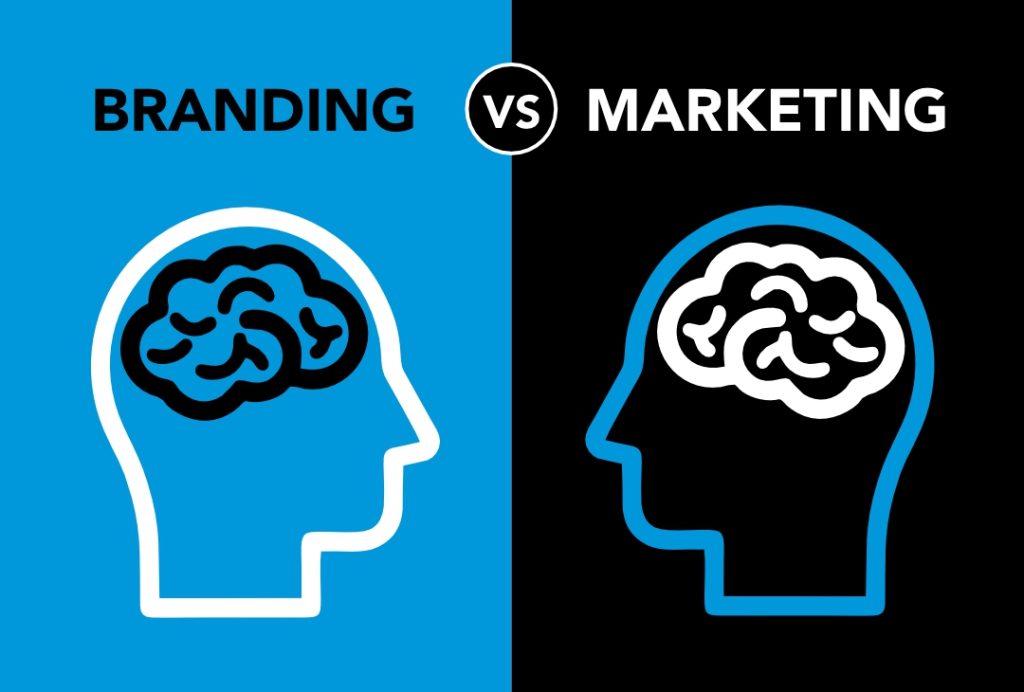
How Branding and Marketing Work Together
Branding and marketing are closely connected but serve different roles in business growth.
Branding focuses on building identity and perception, while marketing focuses on promotion and visibility.
Key differences include:
- Branding defines your business identity and values
- Marketing communicates your message to the audience
- Branding builds long-term trust and recognition
- Marketing drives short-term engagement and conversions
- Branding creates emotional connection
- Marketing generates traffic and leads
When aligned properly, branding and marketing create a powerful growth system.Businesses looking for structured growth can explore reach skyline
5 Key Differences Between Branding and Marketing
Understanding these differences helps businesses use both effectively.
1. Purpose and Focus
Branding focuses on who you are as a business. Marketing focuses on how you promote what you offer.
Branding builds identity, while marketing drives action.
2. Long-Term vs Short-Term Impact
Branding is a long-term investment that builds recognition and trust over time.
Marketing often focuses on short-term campaigns designed to generate immediate results such as leads or sales.
3. Emotional vs Tactical Approach
Branding connects with emotions and shapes how people feel about your business.
Marketing uses tactical strategies to reach and convert audiences.
4. Consistency vs Campaigns
Branding requires consistency across all touchpoints, including visuals, messaging, and customer experience.
Marketing involves campaigns that may change based on goals, seasons, or promotions.
5. Trust vs Visibility
Branding builds trust and credibility.
Marketing increases visibility and drives traffic.
Both are essential, but they serve different roles in business growth.
Benefits of Strong Branding and Marketing Alignment
When branding and marketing work together, businesses experience better results.
Key benefits include:
- Stronger brand recognition and recall
- Higher customer trust and loyalty
- Improved marketing campaign performance
- Better conversion rates
- Consistent customer experience across channels
Alignment ensures that every marketing effort reinforces the brand.
Risks and Challenges
Businesses often face challenges when branding and marketing are not aligned.
Common issues include:
- Inconsistent messaging across platforms
- Weak brand identity
- Confusing customer perception
- Ineffective marketing campaigns
- Poor return on investment
Without a clear strategy, businesses may struggle to achieve sustainable growth.
Best Practices for Balancing Branding and Marketing
To maximize results, businesses should integrate both branding and marketing into their strategy.
- Define a clear brand identity and messaging
- Maintain consistency across all channels
- Align marketing campaigns with brand values
- Focus on both long-term brand building and short-term goals
- Monitor performance and adjust strategies accordingly
These practices help create a balanced and effective approach.
Future Trends in Branding and Marketing
The relationship between branding and marketing will continue to evolve as technology and consumer behavior change.
Key trends include:
- Increased focus on personalized brand experiences
- Integration of AI in marketing strategies
- Growth of content-driven brand building
- Greater emphasis on authenticity and transparency
- Expansion of digital-first brand strategies
Businesses that adapt to these trends will build stronger connections with their audiences.
Conclusion
Branding and marketing are both essential components of business growth, but they serve different purposes. Branding defines who you are, while marketing communicates that identity to the world.
Businesses that understand this difference can create stronger strategies, build trust with their audience, and achieve better results.
Instead of treating branding and marketing as separate efforts, businesses should focus on aligning both to create a consistent and effective growth system.
FAQs
Branding focuses on building identity and perception, while marketing focuses on promoting products and driving customer action.
Marketing can generate short-term results without strong branding, but long-term growth is difficult without a clear brand identity.
Branding builds trust, recognition, and emotional connection with customers, which supports long-term success.
Branding provides the foundation, and marketing uses that foundation to attract, engage, and convert customers.
Businesses should start with branding to define their identity, then use marketing to communicate and promote their offerings.