RS logo Bg-black

Author name: Reach Skyline

From Data to Creativity: How AI is Reshaping Content Marketing
Uncategorized

From Data to Creativity: How AI is Reshaping Content Marketing

Content marketing has evolved significantly over the past decade. Businesses once relied primarily on manual research, intuition, and traditional writing processes to create marketing content. Today, the landscape is rapidly changing as artificial intelligence begins to influence how content is planned, produced, and optimized. AI-powered tools are now capable of analyzing large volumes of data, identifying audience behavior patterns, and assisting marketers in generating relevant content ideas. These technologies are helping businesses move from purely data-driven insights to creative storytelling that resonates with audiences. As organizations compete for digital attention, understanding how artificial intelligence is reshaping content marketing strategies has become increasingly important. Rapid adoption of AI-powered marketing tools Digital platforms generate enormous amounts of data every day. Businesses must analyze this information to understand customer behavior, preferences, and engagement patterns. Several factors highlight why AI-driven content marketing is becoming essential: AI allows marketers to transform complex data into actionable insights, enabling more effective and creative content strategies. How Artificial Intelligence Influences Content Marketing Artificial intelligence helps marketers understand audience behavior and generate content strategies based on data-driven insights. Instead of relying only on assumptions, marketers can now analyze trends and patterns that influence how users interact with content. AI tools can assist with several aspects of content marketing: These capabilities allow businesses to create content that is both data-informed and creatively engaging. Five Ways AI Is Transforming Content Marketing Artificial intelligence is reshaping content marketing through a variety of innovative applications. 1. Data-Driven Content Strategy AI tools analyze user behavior, search trends, and engagement metrics to help marketers identify content opportunities. This enables businesses to: Data-driven insights help marketers develop more effective content strategies. 2. Faster Content Creation AI-powered writing assistants can help generate drafts, outlines, and ideas for blog posts, product descriptions, and marketing campaigns. While human creativity remains essential, AI tools can speed up the content creation process by: This allows marketers to focus more on creativity and storytelling. 3. Personalized Content Experiences AI helps businesses deliver personalized content based on user behavior and preferences. Examples include: Personalization improves user engagement and customer satisfaction. 4. SEO and Content Optimization Search engine optimization is a critical part of content marketing. AI tools can analyze search engine algorithms, keyword trends, and competitor strategies. These tools help marketers: Optimized content has a higher chance of ranking in search results. 5. Predictive Analytics for Marketing Strategy AI-powered analytics can predict future trends by analyzing historical data and user behavior patterns. This helps marketers: Predictive insights enable businesses to stay ahead of changing market trends. Benefits of AI in Content Marketing Integrating artificial intelligence into content marketing strategies offers several advantages. Key benefits include: AI helps businesses scale their content marketing efforts while maintaining quality and relevance. Risks and Challenges Although AI provides powerful capabilities, businesses must also consider potential challenges. Common concerns include: Balancing AI capabilities with human creativity is essential for successful content marketing. Best Practices for Using AI in Content Marketing To achieve the best results, businesses should integrate AI tools thoughtfully into their marketing strategies. Important best practices include: These practices help marketers use AI effectively while maintaining quality content. Future Trends in AI-Driven Content Marketing Artificial intelligence will continue to influence the future of marketing and content creation. Several emerging trends are shaping this transformation: As these technologies evolve, content marketing strategies will become increasingly intelligent, adaptive, and data-driven. Conclusion Artificial intelligence is transforming content marketing by enabling businesses to convert large volumes of data into meaningful creative strategies. By combining data analysis with innovative storytelling, marketers can produce more relevant, personalized, and engaging content. While AI tools offer powerful capabilities, human creativity and strategic thinking remain essential in crafting authentic brand messages. Organizations that successfully integrate artificial intelligence into their content marketing strategies will be better equipped to attract audiences, build trust, and achieve long-term digital growth. FAQs
How Brand Recognition Influences Rankings, GEO, and Conversions
Branding and strategy

How Brand Recognition Influences Rankings, GEO, and Conversions

Brand recognition affects multiple aspects of digital marketing performance, including search rankings, AI search visibility, and customer decision-making. When users repeatedly encounter a brand across search engines, social media, and other digital platforms, they begin to associate the brand with expertise and reliability. Key ways brand recognition influences digital performance include: These signals help search engines determine whether a brand should appear prominently in search results and AI-generated responses. Five Strategies to Build Strong Brand Recognition Businesses that want to improve rankings, GEO visibility, and conversions must focus on building consistent brand awareness. 1. Consistent Brand Identity Across Platforms A recognizable brand identity helps users remember and trust a business. Important elements include: Consistency helps strengthen brand recall and credibility. 2. High-Quality Content Marketing Content plays a major role in building brand authority. Publishing informative and valuable content helps businesses establish expertise in their industry. Examples include: High-quality content increases brand visibility and attracts organic traffic. 3. Social Media Presence and Engagement Social media platforms play a critical role in building brand recognition. Regular posting, community engagement, and influencer collaborations can expand brand reach. Effective strategies include: Active engagement helps strengthen brand familiarity among audiences. 4. Customer Reviews and Reputation Management Online reviews strongly influence both search rankings and customer decisions. Businesses should actively manage their reputation by: Positive reviews enhance brand trust and authority. 5. Strategic Digital Marketing Campaigns Integrated marketing campaigns help reinforce brand recognition across multiple channels. Examples include: Consistent exposure across platforms strengthens brand recall and increases customer trust. Benefits of Strong Brand Recognition Building strong brand recognition offers several advantages for businesses. Key benefits include: When customers recognize a brand, they are more likely to choose it over unfamiliar competitors. Risks and Challenges While brand recognition provides many advantages, businesses may face several challenges when trying to build a strong brand presence. Common challenges include: Overcoming these challenges requires a well-planned branding and marketing strategy. Best Practices for Strengthening Brand Recognition Businesses can improve brand recognition by following several proven strategies: These practices help build credibility and improve brand visibility over time. Future Trends in Brand-Driven Search The role of brand recognition in digital marketing will continue to grow as search technology evolves. Several emerging trends highlight this shift: Businesses that focus on building strong brand recognition will be better positioned to succeed in future search environments. Conclusion Brand recognition plays a major role in improving digital visibility, search rankings, and customer conversions. While technical SEO and keyword optimization remain important, building a trusted brand further strengthens a business’s online presence. Businesses looking to improve their visibility and marketing performance often seek support from experienced teams. Investing in brand recognition is not just a marketing strategy; it is a long-term asset that drives sustainable growth. FAQs

Digital Marketing

Why Your Ads Are Getting Clicks But No Conversions

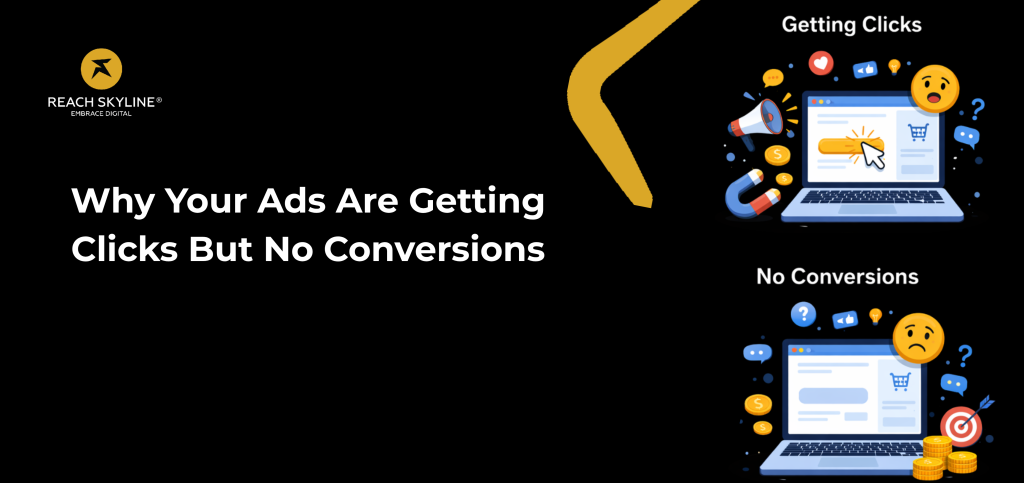
Many businesses launch advertising campaigns and initially feel encouraged when clicks begin to appear in campaign reports. At first glance, a high number of clicks may seem like an indicator that the campaign is performing well. However, the situation becomes concerning when those clicks fail to generate leads, inquiries, or sales. When advertisements attract attention but fail to convert visitors into customers, it usually indicates a breakdown somewhere in the marketing funnel. Clicks demonstrate interest, but conversions reflect meaningful user action. Understanding the gap between these two stages is essential for improving campaign performance and achieving better return on investment. The Growing Challenge of Converting Online Traffic Digital advertising has become increasingly competitive. Businesses across industries invest heavily in targeting strategies, creative development, and performance optimization. In such an environment, even small weaknesses in the conversion process can significantly affect results. Several factors contribute to this challenge: When campaigns generate clicks without conversions, businesses are not only missing potential leads but also allocating budget toward traffic that does not produce measurable results. How the Conversion Process Works The user journey in digital advertising generally follows a simple sequence. A user sees an advertisement, clicks on it, lands on a webpage, and then decides whether to take the intended action. Although the process appears straightforward, most campaigns fail during the final stage of this journey. If the expectations created by the advertisement do not align with what users encounter after clicking, visitors often leave the page without taking any action. Common Reasons Ads Receive Clicks but No Conversions 1. Mismatch Between Advertisement and Landing Page One of the most frequent causes of poor conversions is inconsistency between the advertisement and the landing page. When the message, offer, or tone presented in the ad does not match the landing page content, users may feel confused or misled. Common issues include: Maintaining consistency between the advertisement and landing page helps preserve user trust and encourages further engagement. 2. Poor Audience Targeting Advertising campaigns may generate clicks from users who are not genuinely interested in the product or service being promoted. A high click-through rate does not always indicate successful targeting. For example, targeting a broad audience interested in “fitness” may attract casual viewers, whereas targeting users actively searching for “weight loss programs” may attract individuals with stronger purchase intent. Refining targeting strategies helps improve the quality of incoming traffic. 3. Weak Landing Page Experience Landing pages play a critical role in conversion performance. Even well-performing advertisements can fail if the landing page experience does not support user decision-making. Common landing page issues include: A landing page should guide users smoothly toward the intended action while maintaining clarity and simplicity. 4. Lack of Trust Signals Users often evaluate the credibility of a business before sharing personal information or completing a purchase. If a landing page does not provide evidence of reliability, visitors may hesitate to proceed. Important trust signals include: These elements help reassure users that the business is trustworthy and capable of delivering value. 5. Complicated Conversion Process If the process required to complete a conversion is overly complex, users may abandon the process before finishing. Common issues include: Simplifying the conversion process reduces friction and increases the likelihood of users completing the intended action. 6. Absence of a Clear Value Proposition Users should quickly understand what the business offers and why it is valuable to them. If visitors struggle to identify the benefits of the product or service, they are unlikely to continue exploring the page. A strong value proposition clearly communicates: Clear communication helps visitors make faster and more confident decisions. Strategies to Improve Conversion Performance 1. Align Advertisement Messaging with Landing Pages The transition from advertisement to landing page should feel consistent and seamless. Maintaining alignment in messaging, tone, and offers helps reduce confusion and strengthens user trust. Key practices include: 2. Refine Audience Targeting Precise targeting ensures that advertisements reach users who are more likely to convert. Effective targeting strategies include: Better targeting improves traffic quality and increases conversion potential. 3. Optimize Landing Pages for Conversions Landing pages should guide users toward a clear action without distractions. Effective landing pages typically include: Optimizing these elements helps create a smoother user experience. 4. Incorporate Social Proof Social proof strengthens credibility and reduces uncertainty for potential customers. Examples of effective social proof include: These elements provide reassurance and support the decision-making process. 5. Simplify Forms and Calls to Action Reducing friction in the conversion process improves completion rates. Best practices include: When the conversion process feels straightforward, users are more likely to complete it. 6. Track and Analyze User Data Performance marketing relies heavily on accurate data analysis. Tracking user behavior allows businesses to identify problem areas within the conversion funnel. Useful tools include: Data-driven insights enable informed optimization decisions. Benefits of Improving Conversion Performance Addressing the causes of low conversions can significantly improve advertising outcomes. Potential benefits include: When the entire user journey is optimized, advertising budgets can generate more meaningful business results. Risks and Challenges Misdiagnosing the Problem Businesses sometimes assume that advertisements are the primary issue when the real problem lies within the landing page or conversion process. Excessive Optimization Making multiple changes simultaneously can make it difficult to determine which adjustments actually improved performance. Ignoring Data Insights Decisions based on assumptions rather than data can lead to ineffective optimization strategies. Best Practices for High-Converting Advertising Campaigns Following these practices helps improve overall campaign effectiveness. Future Trends in Digital Advertising Digital advertising continues to evolve as technology advances. Several emerging trends are shaping the future of advertising strategies: Businesses that adapt to these trends will be better positioned to maintain competitive performance in digital marketing. Conclusion When advertisements generate clicks but fail to produce conversions, the problem usually lies within the post-click experience rather than the advertisements themselves.Successful campaigns require alignment between audience targeting, advertisement messaging, and landing page experience. By focusing on these key elements, businesses can transform incoming traffic into meaningful actions such as leads,

Social Media Growth: Why Posting Daily Isn’t Saving You
Branding and strategy

Social Media Growth: Why Posting Daily Isn’t Saving You

If your current social media growth strategy is “post every day and hope something magically goes viral,” congratulations, you’ve joined millions of brands shouting into the void. Posting daily feels productive. It looks disciplined. It even impresses clients who think consistency alone equals growth. But here’s the inconvenient truth: consistency without strategy is just noise. In 2026, social media platforms are smarter, audiences are pickier, and algorithms are ruthless. Posting more doesn’t mean growing more. It often means being ignored more efficiently. Why Social Media Growth Is Failing for Most Brands Social media has shifted from quantity to quality. Platforms like Instagram, LinkedIn, and TikTok now prioritize: So if your brand is posting daily but: Then your social media marketing strategy is broken, not your effort. How Social Media Growth Actually Works Let’s simplify what platforms actually care about. 1. Content Performance Signals Algorithms track: If your content doesn’t trigger these, it gets buried. 2. Audience Relevance Platforms show your content to a small test audience first. If they engage, it spreads. If they scroll past, your post dies quietly. 3. Consistency vs Value Consistency matters, but only when paired with value. Posting daily low-quality content trains the algorithm to ignore you. So no, your problem isn’t “not posting enough.”It’s posting things nobody cares about. The Real Problem: Posting Daily Without Strategy Here’s what typically happens: A beautiful downward spiral. A weak social media content strategy looks like: And then people wonder why growth is stuck. Strategies That Actually Drive Social Media Growth Now we get to the part people usually skip because it requires thinking. 1. Focus on Value-Driven Content Every post should answer at least one: Example:Instead of “We offer SEO services,” try“Why your website traffic isn’t converting (and how to fix it)” See the difference? One sells. The other helps. 2. Build a Content Pillar System Stop posting randomly. Create 3–5 pillars: This improves both organic social media growth and brand authority. 3. Optimize for Engagement, Not Just Reach You don’t need millions of views. You need interaction. Use: 4. Understand Platform Algorithms Each platform rewards different behavior: Ignoring this is like trying to win a game without knowing the rules. 5. Repurpose High-Performing Content If something works, reuse it. Turn: Your content should work harder than you. (Shocking concept, I know.) 6. Invest in Strategic Services Sometimes the issue isn’t effort. It’s direction. A proper social media growth strategy often involves: Because growth isn’t just social. It’s an ecosystem. Benefits of a Strategic Approach Once you stop spamming and start thinking, things improve fast: And the best part?You don’t need to post every single day like a content factory. Risks of Posting Daily Without Strategy Let’s admire the damage: Worst case?People mute you. That’s social media’s version of “I’m tired of your existence.” Best Practices for Sustainable Growth Here’s what actually works long-term: Quality Over Quantity 3 high-quality posts > 7 forgettable ones Data-Driven Decisions Track: Consistent Brand Voice Don’t sound like a different company every week Strong Visual Identity Good design = more attention Audience Understanding Know: Because most content fails at step one: understanding humans. Future Trends in Social Media Growth Brace yourself. It gets more demanding. AI-Driven Content Personalization Platforms will show hyper-relevant content based on behavior. Search-Based Social Media People now search on Instagram and TikTok like Google. Short-Form Video Dominance If you’re still avoiding video, you’re voluntarily becoming irrelevant. Authority Over Virality Brands that educate and build trust will win over those chasing trends. Conclusion Real social media growth comes from understanding your audience, creating content that delivers value, and aligning with how platform algorithms actually work. Brands that focus on quality, relevance, and engagement consistently outperform those that rely purely on frequency. The shift from quantity to strategy is what separates stagnant accounts from high-performing ones. Instead of chasing visibility through constant posting, businesses need to focus on building authority, trust, and connection with their audience. FAQs

Answer Engine Optimisation: A Practical Guide for Strategists
Uncategorized

Answer Engine Optimisation: A Practical Guide for Strategists

Answer Engine Optimisation (AEO) is the process of structuring content so it directly answers user queries across search engines and AI platforms. Unlike traditional SEO, which focuses on ranking pages, AEO focuses on delivering precise, structured answers that can be picked up by Google AI Overviews, voice assistants, and tools like ChatGPT. In simple terms, if SEO gets you visibility, AEO gets you selected. Why Traditional SEO Isn’t Enough Anymore Search behavior has changed dramatically. Users no longer just search, they expect immediate answers. According to Google, a significant percentage of queries now trigger AI-generated summaries, reducing the need to click multiple links. At the same time, conversational searches through voice and AI tools are growing rapidly. This shift means: Strategists who ignore AEO risk losing visibility even with strong SEO rankings. How Answer Engine Optimisation Works AEO works by aligning content with how machines interpret and extract answers. Key Components: Search engines scan for: AI systems prioritize content that is: Core Strategies for AEO Success 1. Target Question-Based Queries Focus on how users actually ask questions: These queries are more likely to trigger AI responses. 2. Use Structured Content Formats Break content into: This improves readability for both users and AI systems. 3. Provide Direct Answers First Start sections with a clear answer, then expand. Example:What is AEO? AEO is the practice of optimizing content to provide direct answers for AI-driven search engines. Simple. Effective. Machines love it. 4. Build Topical Authority Cover related subtopics: This signals expertise and improves ranking potential. 5. Optimize for Entities, Not Just Keywords Search engines understand topics through entities like: Use these naturally to strengthen context. Benefits of Answer Engine Optimisation Challenges in AEO 1. Reduced Click-Through Rates If users get answers directly, they may not visit your site. 2. Constant Algorithm Changes AI search systems evolve rapidly, making consistency difficult. 3. Content Saturation More businesses are optimizing for AEO, increasing competition. Best Practices for Strategists Businesses offering <a href=”#”>SEO services</a>, <a href=”#”>digital marketing services</a>, <a href=”#”>content marketing services</a>, and <a href=”#”>SEO audit services</a> should integrate AEO into their strategies to stay competitive. Future Trends in AEO The future of search is AI-driven. Key trends: According to Google, AI-driven search experiences are becoming central to how users interact with information online. Strategists must adapt by creating content that is: Conclusion Answer Engine Optimisation is no longer optional. It is a critical strategy for staying visible in modern search environments. By focusing on clear answers, structured content, and user intent, businesses can improve their chances of being selected by AI systems. Combining AEO with traditional SEO ensures long-term visibility and relevance in an evolving digital landscape. To explore advanced strategies and improve your search performance, visit: Reach Skyline FAQs

Google Tries AI Headline Edits, No Control for Publishers
Uncategorized

Google Tries AI Headline Edits, No Control for Publishers

Google AI headline rewrites are no longer a small experiment. They are quietly reshaping how content appears in search results. If you thought your carefully crafted titles were safe, think again. Google is now testing AI-generated headline edits directly in search results, often replacing the original title written by publishers. And the best part? You don’t get a say in it. For digital marketers, SEO professionals, and content creators, this raises a serious question: who really controls your content in search? Why This Shift Matters Search visibility depends heavily on headlines. They drive rankings, clicks, and trust. Now, Google is rewriting them using AI, taking partial control away from publishers. Google claims this improves clarity and relevance. From a publisher’s side, it’s more like your content getting edited without permission. According to HubSpot, over 64% of marketers already use AI for content, but when Google applies it externally, control shifts. This affects: How Google AI Headline Rewrites Work Google’s system analyzes: It then generates what it believes is a “better” headline. Instead of your original title, users may see: Simple Example: Original Title:“10 Proven Digital Marketing Strategies for 2026” Google AI Version:“Top Digital Marketing Strategies That Work” Impact on Digital Marketing Roles This change doesn’t hit everyone equally. Some roles are going to feel it more than others. 1. SEO Specialists (Most Affected) Your entire job revolves around optimizing titles for rankings and CTR. Now Google might override them anyway. That means: 2. Content Writers You spent 20 minutes crafting that perfect headline. Google replaces it in 0.2 seconds. Brutal. Still, content depth matters more now than ever. 3. Brand Managers Brand tone consistency can get distorted. AI doesn’t care about your brand voice. It cares about clicks. 4. Performance Marketers CTR fluctuations will become harder to diagnose. Was it your content… or Google’s rewrite? Benefits of AI Headline Rewrites Before declaring war on Google, there are some upsides. Improved Relevance AI may better match user intent, especially for vague queries. Higher CTR in Some Cases Optimized titles can increase clicks if your original one was weak. Better Accessibility Simplified headlines may help users understand content faster. Risks and Challenges Now the fun part. The chaos. Loss of Control Publishers cannot opt out. That alone is enough to annoy anyone in SEO. Brand Misrepresentation AI may remove brand names or change tone, affecting trust. Clickbait Risk AI might oversimplify or exaggerate headlines. SEO Strategy Disruption Traditional title optimization becomes less reliable. According to Google Search Central, titles are rewritten when the system believes the original doesn’t align with query intent. Translation: Google thinks it knows better. Strategies to Adapt and Overcome You can’t stop it. So naturally, you adapt. 1. Focus on Content Quality Google rewrites weak titles more often. Strong, clear, and relevant content reduces interference. 2. Optimize H1 and Supporting Tags Google pulls from multiple elements. Make sure: 3. Improve Query Alignment Write titles that match real search intent, not just keywords. 4. Monitor SERP Changes Track: Use tools and regular SEO audit services to stay updated. 5. Strengthen Entity-Based SEO Google relies on entities, not just keywords. Build authority around: Best Practices for SEO in the AI Era Integrating content marketing services can help create deeper, more structured content that AI systems understand better. Future Trends in AI and Search This is just the beginning. Google is moving toward: A Google report highlights that AI-driven search features are improving user satisfaction by over 20% in certain queries. That means: Digital marketers will need to shift toward digital marketing services that integrate AI strategies rather than fight them. Conclusion Google AI headline rewrites are changing the rules of SEO. Whether you like it or not, control over your search appearance is slipping away. The smartest move isn’t resistance, it’s adaptation.Focus on strong content, align with user intent, and build authority. Because in a world where Google edits your headlines, only genuinely valuable content survives. If you’re looking to stay ahead of these changes, working with a reliable digital marketing agency can help you adapt your SEO strategy, improve visibility, and maintain consistent growth despite evolving search algorithms. FAQs

Can AI help with audience targeting?
Uncategorized

Mis-Targeting in Marketing: Where Brands Lose the Plot

Mis-targeting in marketing is exactly what it sounds like: brands talking to the wrong people and then acting surprised when nobody responds. It’s one of the most common reasons campaigns fail. Not bad creatives. Not low budgets. Just poor audience targeting. When your message reaches the wrong audience: And yet, brands keep repeating the same mistake. Louder campaigns, bigger budgets, same wrong audience. Why This Topic Matters Today Marketing has never had more data. Ironically, it has also never been easier to misuse it. According to HubSpot, 42% of marketers say reaching the right audience is their biggest challenge. Meanwhile, Google reports that personalized ads can improve conversion rates by up to 20% when targeting is accurate. So the gap is obvious: Why? Because targeting is treated like a checkbox, not a strategy. Today’s environment makes mis-targeting even more dangerous: If you target wrong, you don’t just lose money. You lose relevance. How Mis-Targeting in Marketing Happens Mis-targeting is rarely a single mistake. It’s usually a chain of lazy assumptions. 1. Poor Audience Definition Brands rely on vague personas like:“Age 25–40, interested in fitness” That’s not targeting. That’s guessing. 2. Over-Reliance on Demographics Demographics tell you who someone is, not why they buy. Behavioral targeting matters more: 3. Ignoring Customer Journey Stages Showing a “Buy Now” ad to someone who just discovered your brand is like proposing on the first date. 4. Data Without Context Analytics dashboards look impressive. Interpretation is where things fall apart. 5. Platform Misalignment Each platform has different user intent: Treating them the same guarantees failure. Strategies to Fix Audience Targeting Now for the part where brands either improve… or continue blaming “market conditions.” 1. Build Real Customer Personas Not the decorative kind. Use: Focus on: 2. Use Intent-Based Targeting Intent beats demographics every time. Examples: This is where SEO services play a major role in capturing high-intent users. 3. Segment Your Audience Properly Stop treating all users the same. Segment based on: 4. Leverage First-Party Data Third-party cookies are fading. Your own data is gold. Use: 5. Test and Optimize Continuously Targeting is not “set and forget.” Run: Benefits of Getting Targeting Right When targeting works, everything else becomes easier. 1. Higher Conversion Rates Right audience = better response. 2. Lower Customer Acquisition Cost You stop wasting money on uninterested users. 3. Stronger Brand Positioning Your message resonates instead of confusing people. 4. Better Campaign Performance All channels improve: 5. Improved Marketing ROI Finally, numbers that don’t make your finance team nervous. Risks and Challenges of Poor Targeting Let’s not sugarcoat this. 1. Budget Waste You pay for impressions that never convert. 2. Brand Dilution Wrong audience = wrong perception. 3. Low Engagement Clicks drop. Bounce rates rise. 4. Missed Opportunities Your actual audience goes to competitors. 5. Misleading Data Bad targeting creates bad insights, which leads to worse decisions. Best Practices for Accurate Targeting Align Marketing with Business Goals Targeting should support: Use Multi-Channel Data Combine insights from: Integrate Marketing Efforts Strong digital marketing services connect: Focus on Content Relevance Your message must match the audience’s intent. That’s where content marketing services become critical. Conduct Regular Audits Use SEO audit services to identify: Future Trends in Audience Targeting AI-Driven Targeting AI tools will predict behavior, not just analyze it. Hyper-Personalization Content tailored to individual users in real time. Privacy-First Marketing First-party data strategies will dominate. Contextual Targeting Comeback Ads based on content context, not just user data. Cross-Platform Intelligence Unified insights across all channels. Conclusion Mis-targeting in marketing is one of the fastest ways to waste time, money, and effort. It’s not about how much you spend. It’s about who you reach. Brands that succeed: Those that don’t will keep running campaigns that look impressive… and perform terribly. Fix your targeting, and everything else starts working. Ignore it, and no amount of creativity will save you. If you’re struggling to reach the right audience or improve campaign performance, working with a professional digital marketing agency can help you build data-driven strategies that actually convert. FAQs

Understanding Generative Engine Optimization (GEO) in Modern Search
GEO

Understanding Generative Engine Optimization (GEO) in Modern Search

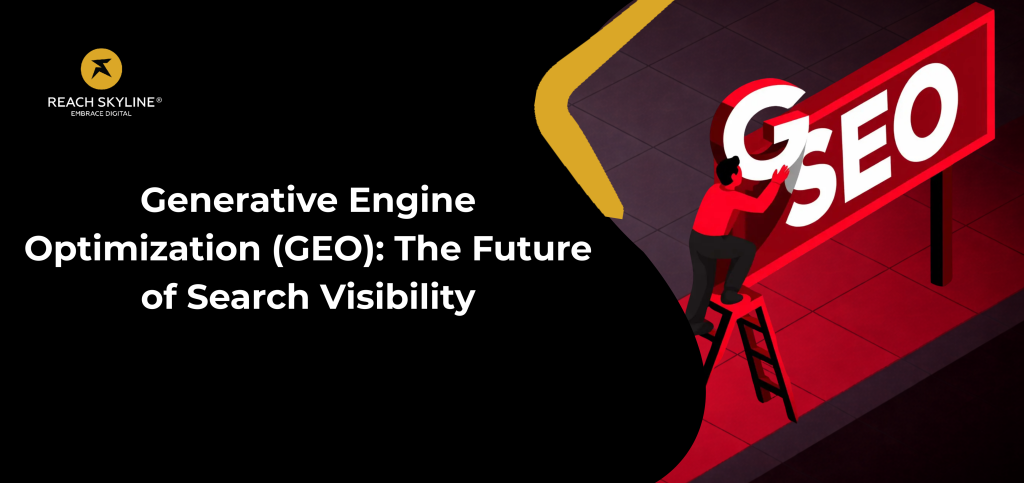
Generative Engine Optimization (GEO) is a next-generation approach to search optimization that focuses on making content visible within AI-generated responses rather than just traditional search engine rankings. As platforms like ChatGPT, Google AI Overviews, Gemini, and Perplexity reshape how users access information, GEO ensures that content is not only indexed but also interpreted and presented by AI systems. Unlike traditional SEO, which prioritizes keyword rankings and backlinks, Generative Engine Optimization (GEO) emphasizes clarity, context, and structured information. AI engines rely on natural language processing and machine learning algorithms to extract meaning, making it essential for content to be logically organized and contextually rich. Why Generative Engine Optimization (GEO) Matters in Today’s AI-Driven Search Landscape Search behavior has shifted dramatically in recent years. Users are no longer typing fragmented keywords; instead, they are asking detailed, conversational questions. According to Google, AI-powered search features like AI Overviews are now influencing a significant portion of search queries. Additionally, HubSpot reports that 64% of marketers actively use AI tools to enhance their SEO and content strategies. This shift introduces several changes: Generative Engine Optimization (GEO) becomes essential because it aligns content with these new expectations. Without GEO, even high-ranking pages may fail to appear in AI-generated answers, reducing their overall visibility and effectiveness. How Generative Engine Optimization (GEO) Works in AI Search Engines To understand how Generative Engine Optimization (GEO) works, it’s important to look at how AI search engines process content. Entity-Based Understanding in AI Systems AI systems recognize entities such as brands, services, and topics. For example, “SEO services” is treated as a concept linked to digital marketing, analytics, and website optimization rather than just a keyword. Contextual Relevance and Search Intent AI evaluates whether content fully answers a user’s query. Content that lacks depth or context is less likely to be selected. Structured Content for AI Extraction AI systems prefer: These elements make it easier to extract and summarize information. Trust and Authority Signals (E-E-A-T) Content must demonstrate: AI platforms prioritize credible and well-structured content when generating responses. Effective Strategies for Implementing Generative Engine Optimization (GEO) To succeed with Generative Engine Optimization (GEO), businesses must adapt their content strategies. Creating Clear and Direct Answers for AI Interpretation Content should answer questions immediately and clearly. Avoid unnecessary complexity. Structuring Content for Readability and AI Processing Use: Optimizing for Conversational and Voice Search Queries Users now search using natural language. Content should reflect how people speak and ask questions. Building Topical Authority Across Related Content Creating multiple pieces of content around a topic strengthens credibility and improves AI recognition. Using Internal Linking to Strengthen Content Relevance Integrate links naturally: Incorporating Data, Statistics, and Real-World Examples According to HubSpot, over 70% of marketers say content marketing improves engagement, reinforcing the importance of structured and informative content. Example:A business that optimized its blog for AI search saw increased mentions in AI-generated answers, even without holding the top Google ranking. Key Benefits of Generative Engine Optimization (GEO) for Businesses Improved Visibility Across AI Platforms GEO ensures your content appears in AI-generated responses, not just search results. Enhanced Brand Authority and Trust Being referenced by AI systems builds credibility and strengthens brand perception. Better User Engagement and Experience Users receive clear, structured answers, increasing satisfaction and trust. Future-Proof Digital Marketing Strategy GEO prepares businesses for the ongoing evolution of search technology. Challenges and Risks Associated with Generative Engine Optimization (GEO) Decline in Traditional Click-Through Rates AI-generated answers may reduce the need for users to visit websites. Risk of Misinterpretation by AI Systems If content lacks clarity, AI may misrepresent the information. Increasing Competition in AI Search Optimization More businesses are adopting GEO, making differentiation harder. Rapid Evolution of AI Algorithms Strategies must be continuously updated to remain effective. Best Practices to Succeed with Generative Engine Optimization (GEO) These practices ensure that content remains relevant, trustworthy, and AI-friendly. Future Trends Shaping Generative Engine Optimization (GEO) Expansion of AI-Driven Search Experiences AI will dominate how users access information across platforms. Growth of Voice and Conversational Interfaces Voice search will further increase demand for conversational content. Personalization of AI Search Results AI systems will tailor responses based on user behavior and preferences. Integration Across Digital Ecosystems GEO will extend beyond search engines into apps, devices, and social platforms. Greater Emphasis on Authority and Trust Only credible and authoritative sources will consistently appear in AI-generated responses. Conclusion Generative Engine Optimization (GEO) represents the future of search visibility in an AI-driven world. By focusing on structured content, contextual relevance, and trust signals, businesses can ensure their content is not only discoverable but also selected and presented by AI systems. As search continues to evolve, adopting Generative Engine Optimization (GEO) is no longer optional it is essential for maintaining visibility, authority, and competitiveness in the digital landscape. FAQs

How Webflow and Google Ads Bridge the Gap Between Ads and Website Results
Branding and strategy

How Webflow and Google Ads Bridge the Gap Between Ads and Website Results

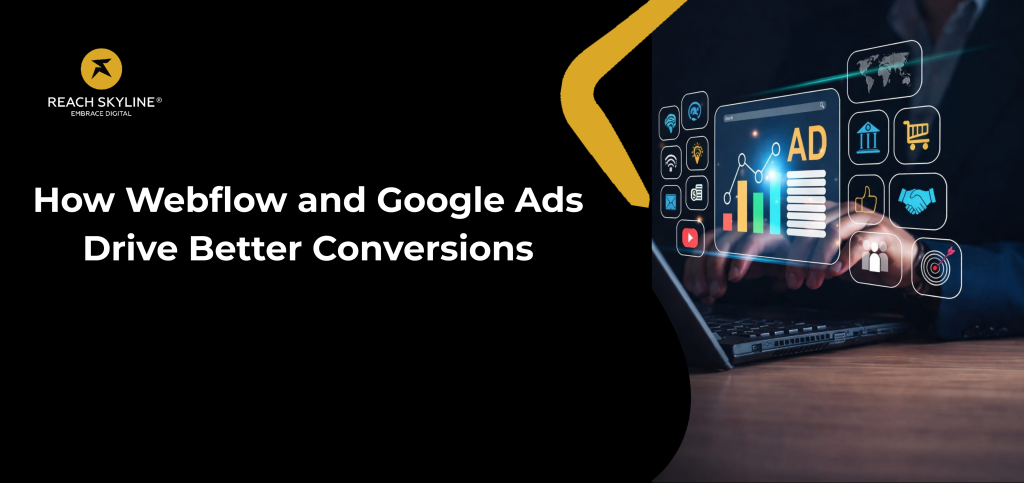
Running paid advertising campaigns can be easy, but generating real results can be challenging. Many businesses invest in Google Ads expecting quick leads and conversions, yet results often fall short because of what happens after users click the ad. Slow websites, poorly designed landing pages, or confusing navigation can drive visitors away.  By combining Webflow and Google Ads, businesses can create fast, conversion-focused landing pages that improve user experience and turn ad clicks into meaningful business results. Why This Matters in Modern Digital Marketing Digital advertising has become one of the most competitive marketing channels. Businesses across industries are constantly competing for attention and visibility. According to Google, companies earn an average of $2 in revenue for every $1 spent on Google Ads when campaigns are properly optimized. However, ad performance does not depend only on targeting or ad copy. The experience users encounter after clicking the ad plays a crucial role in determining whether they stay or leave. Research from HubSpot shows that companies using optimized landing pages generate up to 55% more leads compared to those using generic website pages. This highlights a simple reality: a successful ad campaign needs an equally strong website experience. Understanding the Connection Between Ads and Website Performance When a user clicks a Google Ad, they expect a fast, relevant, and seamless experience. If the landing page fails to meet that expectation, the user quickly exits. Google measures this experience using a metric called Quality Score, which directly affects: One of the most important factors influencing Quality Score is Landing Page Experience. Google evaluates whether a landing page: If the landing page performs poorly, advertising costs increase while conversions decrease. This is why the website platform used for landing pages becomes extremely important. How Webflow Improves Google Ads Performance Webflow offers several advantages that make it ideal for creating landing pages for advertising campaigns. Fast Website Performance Website speed plays a major role in both user experience and ad performance. Webflow generates clean, optimized code and provides high-performance hosting. This ensures that landing pages load quickly across devices. Faster pages reduce bounce rates and keep visitors engaged long enough to take action. Google research shows that 53% of mobile users abandon websites that take longer than three seconds to load, highlighting how critical speed is for conversions. Conversion-Focused Landing Pages Many businesses make the mistake of directing ad traffic to their homepage. Unfortunately, homepages are rarely designed to convert paid traffic. Webflow allows marketers to create dedicated landing pages for specific campaigns. Effective landing pages typically include: This focused structure helps guide visitors toward taking action. Flexible Design and Marketing Control One of Webflow’s biggest advantages is the level of design freedom it provides. Marketing teams can quickly build and modify landing pages without relying heavily on developers. This allows businesses to: This flexibility makes continuous optimization much easier. Seamless Conversion Tracking Understanding campaign performance requires accurate data. Webflow integrates easily with important marketing tools such as: These integrations allow businesses to track key actions like: With accurate conversion tracking, marketers can clearly measure campaign performance and improve ROI. Strategies for Maximizing Results with Webflow and Google Ads Running ads and building landing pages is not enough. A clear strategy is essential. Align Ad Messaging With Landing Pages The message in your Google Ad should match the headline on the landing page. When users see consistency between the ad and the page, they are more likely to trust the offer. Use Dedicated Landing Pages Each advertising campaign should lead to a page designed specifically for that campaign’s audience and objective. Optimize for Mobile Users A significant portion of ad traffic comes from mobile devices. Ensuring fast load speeds and mobile-friendly layouts is essential. Continuously Test and Improve Successful marketers constantly test different elements of their landing pages, including: Even small improvements can lead to higher conversion rates. Benefits of Using Webflow for Advertising Campaigns Businesses that use Webflow alongside Google Ads often experience several key benefits. Better User Experience Webflow enables visually engaging websites with smooth navigation and responsive design. Higher Conversion Potential Campaign-specific landing pages increase the likelihood that visitors will take the intended action. Faster Campaign Execution Marketing teams can launch landing pages quickly without waiting for extensive development support. Improved SEO and Performance Webflow websites are structured in a way that supports both organic SEO efforts and paid advertising campaigns, creating a balanced digital marketing strategy. Challenges Businesses May Still Face Even with the right tools, certain challenges can still affect campaign performance. Incorrect Audience Targeting If ads are shown to the wrong audience, even a perfectly designed landing page may struggle to convert. Weak Value Proposition Both ads and landing pages must clearly communicate why the offer is valuable. Incomplete Conversion Tracking Without proper tracking, businesses cannot accurately measure results or optimize campaigns. Regular performance reviews and marketing audits can help identify these issues early. Future Trends in Ad-Driven Websites Digital marketing continues to evolve rapidly, and advertising strategies are becoming more sophisticated. AI-Powered Campaign Optimization Artificial intelligence tools are increasingly used to optimize ad targeting, bidding strategies, and landing page performance. Personalized Landing Pages Future websites may dynamically adapt content based on user behavior, location, or preferences. Integrated Marketing Platforms Website platforms and advertising tools are becoming more connected, allowing marketers to manage campaigns and website performance in a single ecosystem. Webflow’s flexibility makes it well positioned for these future developments. Conclusion The success of digital advertising depends on more than just running ads. What truly determines results is the experience users have after clicking those ads. By combining Webflow and Google Ads, businesses can create fast, relevant, and conversion-focused landing pages that transform ad clicks into real business outcomes. When advertising strategy and website experience work together, marketing campaigns become significantly more effective and profitable.Learn more about building high-performing marketing websites at https://reachskyline.com/ . FAQs

What is LinkedIn automation in B2B marketing?
Uncategorized

How LinkedIn Automation and Advanced Tools Enhance B2B Marketing

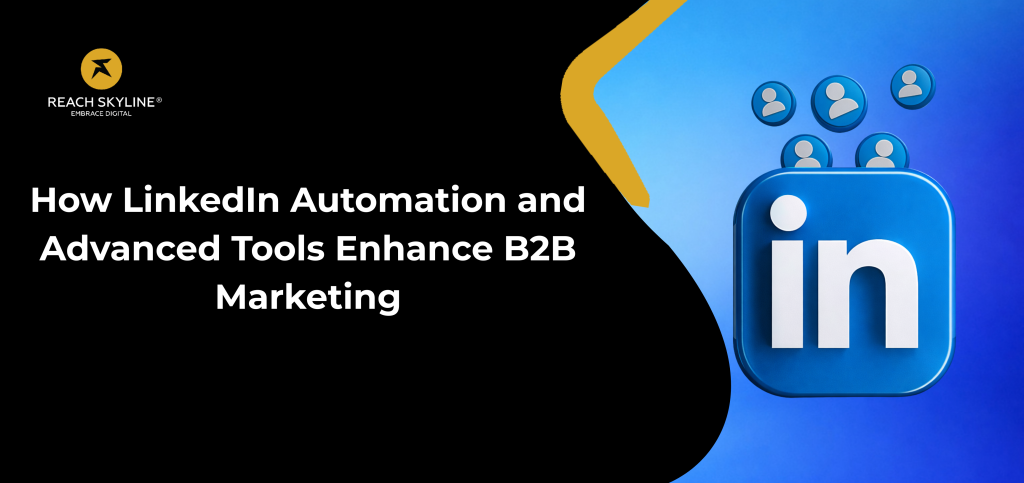
Understanding LinkedIn Automation in Modern B2B Marketing LinkedIn has evolved into the most powerful platform for professional networking and B2B marketing. With more than 1 billion professionals worldwide, businesses increasingly rely on LinkedIn to connect with decision-makers, generate leads, and build partnerships. This is where LinkedIn automation becomes valuable. LinkedIn automation refers to the use of specialized software tools to automate repetitive tasks such as: Instead of manually sending hundreds of messages every week, marketers use automation tools to scale their outreach while maintaining personalization. For B2B organizations, this creates a powerful combination of efficiency, scalability, and lead generation potential. Why LinkedIn Automation Is Transforming B2B Marketing Modern B2B marketing is increasingly data-driven and relationship-focused. LinkedIn stands at the center of this shift. According to HubSpot, LinkedIn generates 277% more leads than Facebook and Twitter combined, making it the most effective social network for B2B lead generation. However, manual outreach limits how many prospects a business can reach. LinkedIn automation tools solve this problem by allowing marketers to: With automation, B2B teams can focus on building relationships instead of performing repetitive tasks. This is especially valuable for companies offering digital marketing services, consulting, SaaS products, or enterprise solutions. How LinkedIn Automation Tools Work LinkedIn automation platforms operate by integrating with LinkedIn accounts and performing actions based on predefined workflows. These workflows usually follow a structured process. Prospect Identification Automation tools allow marketers to filter prospects based on: This ensures outreach targets decision-makers who are more likely to convert. Automated Outreach Sequences Once prospects are identified, tools send personalized connection requests and follow-up messages. Example sequence: This systematic process ensures consistent engagement without manual effort. Campaign Tracking Automation dashboards provide metrics such as: These insights allow marketing teams to continuously optimize campaigns. Proven Strategies for Using LinkedIn Automation Effectively Automation tools are powerful, but success depends on how they are used. Here are strategies that successful B2B marketers follow. Hyper-Targeted Prospecting The biggest mistake businesses make is targeting everyone. Instead, define a clear Ideal Customer Profile (ICP) based on: This dramatically increases response rates. Personalized Outreach Messages Automation should never feel robotic. Successful campaigns include: For example: Instead of sending a generic message, a marketer might reference a prospect’s recent post or company update. This creates genuine human interaction despite automation. Content-Based Lead Nurturing LinkedIn outreach becomes more effective when combined with content. Marketers often share: This strategy aligns well with content marketing services that help businesses build authority while nurturing leads. Multi-Step Campaign Sequences Instead of one message, automation tools create structured engagement sequences. Typical campaigns include: This gradual approach builds trust over time. Key Benefits of LinkedIn Automation for B2B Companies When implemented correctly, LinkedIn automation delivers several measurable advantages. Scalable Lead Generation Manual outreach limits marketers to a small number of daily interactions. Automation allows teams to engage hundreds of prospects per week without sacrificing quality. Time Efficiency Repetitive tasks like sending follow-ups can consume hours daily. Automation tools reduce these tasks dramatically, allowing marketing teams to focus on strategy and relationship building. Better Data Insights Advanced tools provide analytics such as: These insights help optimize campaigns over time. Improved Marketing ROI According to LinkedIn’s Marketing Solutions report, 80% of B2B leads generated from social media come from LinkedIn. Automation helps companies capitalize on this opportunity more effectively. Risks and Challenges of LinkedIn Automation Despite its advantages, LinkedIn automation must be used carefully. Improper use can damage brand reputation or violate platform policies. Risk of Account Restrictions Excessive automation may trigger LinkedIn’s security systems. To prevent this: Poor Personalization If messages feel automated, prospects may ignore them. Personalized messaging remains critical. Over-Reliance on Automation Automation should support relationship building, not replace it. Human conversations and authentic engagement still drive conversions. Best Practices for LinkedIn Automation Success Experienced marketers follow specific guidelines to maximize automation results. Use Smart Automation Limits Maintain realistic activity levels to avoid account restrictions. Typical safe ranges include: Combine Automation with Content Strategy High-performing LinkedIn campaigns include content such as: Businesses often integrate automation with SEO services and content marketing services to strengthen their digital presence. Optimize LinkedIn Profiles Before launching automation campaigns, ensure profiles are optimized. Key elements include: A well-optimized profile significantly improves conversion rates. Conduct Regular Performance Audits Campaign performance should be monitored regularly. Businesses often use SEO audit services and digital analytics to evaluate lead generation performance and refine strategies. Future Trends in LinkedIn Automation and B2B Marketing LinkedIn automation is evolving rapidly as AI and data analytics become more sophisticated. Several trends are shaping the future. AI-Powered Personalization Modern automation platforms now use AI to generate highly personalized outreach messages based on user data. Predictive Lead Scoring Advanced tools analyze prospect behavior to identify high-intent leads. This helps sales teams prioritize the most promising opportunities. Integration with CRM Systems LinkedIn automation tools increasingly integrate with CRM platforms like: This ensures seamless tracking of leads across the entire sales pipeline. According to Gartner, organizations using AI-driven marketing automation see up to 30% higher campaign efficiency compared to manual marketing efforts. The Role of LinkedIn Automation in Modern B2B Growth LinkedIn automation has become a powerful engine for B2B marketing success. By automating repetitive tasks, businesses can focus on what truly matters: building relationships, delivering value, and nurturing long-term partnerships. When combined with strong strategies like digital marketing services, content marketing services, and data-driven outreach, LinkedIn automation enables companies to generate high-quality leads at scale. Organizations that adopt these tools responsibly can create consistent growth pipelines while maintaining authentic connections with prospects. Boost Your B2B Growth with Strategic Digital Marketing Automation alone isn’t enough to dominate modern marketing channels. Businesses that combine LinkedIn outreach, SEO services, content marketing services, and comprehensive digital marketing services create stronger lead generation ecosystems. A professional SEO audit services strategy can also identify opportunities to improve search visibility and attract high-quality inbound leads alongside LinkedIn campaigns. FAQs

Scroll to Top