RS logo Bg-black

Author name: Reach Skyline

Uncategorized

From Automation to AI: How Business Technology Has Evolved

Technology has always been a driving force behind business growth. From small family-owned shops to multinational corporations, advancements in technology have consistently enabled organizations to operate more efficiently, make better decisions, and reach customers in innovative ways. Over the years, the landscape of business tools has shifted dramatically. What once relied heavily on manual processes gradually moved toward automation, where repetitive tasks were streamlined for efficiency. Today, businesses are embracing artificial intelligence (AI), which not only automates tasks but also analyzes data, predicts trends, and provides actionable insights. This evolution from manual workflows to intelligent systems reflects a broader trend of adapting to modern business needs, improving overall productivity, and enhancing customer experiences. Understanding Business Technology Evolution The term “Business Technology Evolution” refers to the continuous development of tools and systems that support how companies operate. Understanding this evolution is critical for businesses aiming to stay competitive and efficient in a fast-paced world. In simple terms, the journey starts with manual processes, moves to digital tools, then to automation, and finally integrates AI. Each stage brings unique advantages, from reducing human error and saving time to enabling smarter, data-driven decisions. Companies that embrace these changes can experience cost efficiency, faster decision-making, and improved customer experiences, all of which contribute to long-term growth and sustainability in a competitive market. Early Stages: Manual Processes to Digital Tools In the early days, businesses heavily relied on paperwork and manual record-keeping. The introduction of computers and software brought major improvements in accuracy and reporting. Key points: Automation Era: Streamlining Repetitive Tasks The next stage in the evolution of business technology focused on automation. Automation replaced repetitive, time-consuming tasks with systems that could operate independently, improving productivity and accuracy. Examples include automated payroll, inventory management, and email marketing tools. By reducing manual effort, businesses could focus on strategic initiatives rather than routine work. Explore Reach Skyline’s  marketing automation implementation services, they have reported more streamlined workflows, faster task completion, and better allocation of resources. This stage demonstrates how businesses move from simple task automation to more intelligent systems that lay the foundation for AI adoption. AI in Business Technology AI has become a cornerstone of modern enterprises, transforming the way businesses make decisions and interact with customers. AI in business technology involves using machine learning, natural language processing, and data analytics to perform tasks that once required human intelligence. With AI, companies can analyze massive datasets, predict trends, personalize customer experiences, and optimize workflows, all in real-time. This not only improves efficiency but also provides a competitive edge in markets that demand agility and informed decision-making. As AI tools become more accessible, even small and mid-sized businesses can implement solutions that were once limited to large corporations. Key AI Applications in Business AI is no longer a futuristic concept—it is actively shaping how businesses operate today. Examples include: Benefits of AI in Business Technology The advantages of AI extend beyond task automation to strategic business growth. Benefits include: Transitioning from Automation to AI in Business Moving from automation to AI requires careful planning and implementation. Automation to AI in business involves taking existing automated processes and enhancing them with intelligent systems that can learn, adapt, and provide predictive insights. The transition is not just about technology; it also involves adapting workflows and training employees to work alongside AI tools effectively. Steps to Adopt AI from Existing Automation in Business Adopting AI doesn’t happen overnight, but businesses can follow a structured approach: Modern Business Technology Trends Businesses today are embracing modern business technology trends to remain relevant and efficient. Cloud computing allows remote collaboration, data analytics drives smarter business strategies, and AI tools enhance automation and personalization. Companies are increasingly integrating these trends to support flexible operations, improve customer engagement, and respond to market changes quickly. From small startups to established enterprises, staying updated with these trends ensures long-term growth, operational efficiency, and improved customer experiences. The Future of Business Technology Evolution The evolution of business technology is far from over. AI, machine learning, and emerging technologies will continue shaping how organizations operate. Companies partnering with modern solution providers like Reach Skyline are already leveraging these tools to stay ahead. Trends to watch: The journey from manual processes to automation and now AI illustrates the remarkable evolution of business technology. Each stage has brought efficiency, accuracy, and smarter decision-making to organizations across industries. Today, AI empowers businesses to analyze data, predict trends, and deliver personalized experiences, transforming operations like never before. By staying updated with modern business technology trends and embracing tools thoughtfully, companies can gain a competitive edge, optimize resources, and enhance customer satisfaction. As technology continues to advance, businesses that adapt proactively will thrive in an increasingly intelligent and automated world. Frequently Asked Question
AI

Using AI to Understand Customer Behavior and Preferences

In today’s competitive business landscape, understanding customers has never been more critical. Businesses need to know what drives their customers’ decisions, preferences, and behaviors to deliver meaningful experiences and stay ahead of competitors. Traditional methods like surveys and focus groups provide some insights, but they often lack depth and scale. This is where artificial intelligence (AI) comes into play. By analyzing vast amounts of data, AI allows businesses to uncover patterns, anticipate needs, and predict behavior with unprecedented accuracy. From personalizing recommendations to optimizing marketing strategies, AI is transforming how companies interact with customers. How AI Analyzes Customer Behavior Understanding how AI analyzes customer behavior is essential for any business looking to gain a competitive edge. AI collects data from multiple touchpoints such as websites, mobile apps, social media, and email campaigns. It processes this data using machine learning algorithms and advanced analytics to identify trends and patterns that might be invisible to human analysts. These insights allow businesses to target customers more effectively, personalize their experiences, improve engagement, and make smarter marketing decisions. By continuously learning from interactions, AI ensures strategies evolve in real-time, helping companies respond quickly to changing customer expectations while improving retention and conversion rates. Data Collection and Analysis by AI for Business Growth AI plays a critical role in gathering and analyzing customer data from various sources, including online interactions, purchase history, and feedback. It tracks metrics like clicks, time spent on pages, and buying patterns to generate actionable insights. Tools and solutions from Reach Skyline help businesses leverage this data to make informed decisions and optimize workflows. AI can identify patterns and trends that humans may overlook, such as subtle changes in buying behavior or emerging preferences. By analyzing these insights, businesses can predict demand, refine product offerings, and create more personalized customer experiences, ultimately driving revenue growth and operational efficiency. Predictive Insights with AI AI doesn’t just analyze historical data; it predicts future customer behavior. Key examples include: These predictive capabilities make AI-driven customer analytics a vital tool for strategic planning and customer engagement. AI Tools for Understanding Customer Behavior Businesses today rely on multiple AI tools for understanding customers. These tools integrate seamlessly with existing systems and provide insights that improve decision-making and marketing effectiveness. CRM platforms combined with AI allow better audience segmentation and personalization. AI-powered analytics platforms track interactions across multiple channels and deliver dashboards for actionable insights. Chatbots collect real-time data during customer conversations, while recommendation engines suggest products or content based on individual preferences. Together, these tools allow companies to optimize strategies, enhance engagement, and predict trends with a precision that manual methods cannot achieve. Chatbots and Virtual Assistants Chatbots and virtual assistants are not just customer support tools—they are also powerful data-gathering systems. Key benefits include: These AI tools help companies understand their customers at a granular level and continuously improve service quality. AI in Customer Behavior: Transforming Business Decisions The impact of AI in customer behavior extends beyond analytics to influence overall business strategy. By understanding customer patterns, companies can improve product development, marketing, and user experiences. AI enables businesses to anticipate market trends, tailor campaigns, and adjust strategies in real-time. Organizations can make informed decisions about pricing, inventory, and customer engagement initiatives. The result is a more responsive, data-driven business that delivers value to both customers and stakeholders while staying ahead in competitive markets. Understanding Customer Behavior with AI in Marketing AI is revolutionizing marketing by providing actionable insights for campaign optimization. Understanding customer behavior with AI allows businesses to target audiences more precisely, create relevant content, and select the best channels for engagement. It can optimize ad placements, personalize emails, and predict which customers are most likely to respond to offers. By continuously analyzing performance, AI ensures marketing strategies evolve alongside customer behavior, reducing wasted spend and improving ROI. Companies that adopt these AI-powered approaches can connect with audiences more meaningfully and drive sustainable business growth. Predictive Marketing Strategies AI helps businesses forecast customer needs and tailor campaigns before demand peaks. Key strategies include: These strategies reduce waste, improve campaign efficiency, and maximize returns on marketing investments. Benefits of AI-Driven Customer Analytics Using AI-driven customer analytics provides businesses with several advantages: These benefits collectively help businesses strengthen relationships, increase loyalty, and drive revenue growth. Future of AI in Customer Behavior Analytics The future of AI for customer insights is promising, with innovations that will further refine how businesses understand and serve their customers: AI has revolutionized how businesses understand customer behavior and preferences. By collecting data, predicting trends, and providing actionable insights, AI enables smarter decisions, personalized experiences, and optimized marketing strategies. Businesses that adopt AI now, with Reach Skyline, will be better prepared to implement customer-centric strategies and stay ahead of market changes. As AI continues to evolve, businesses that integrate these tools proactively will not only improve operational efficiency but also gain a competitive edge in a customer-driven marketplace, shaping the future of marketing and business growth.

The ROI of AI Investments: How Businesses Can Measure SuccessThe ROI of AI Investments: How Businesses Can Measure Success
Uncategorized

The ROI of AI Investments: How Businesses Can Measure Success

Artificial Intelligence (AI) has become a game-changer for businesses across industries. Companies are investing in AI to streamline operations, improve decision-making, boost customer experiences, and drive revenue growth. However, investing in AI is only effective if businesses can measure its impact. Understanding the ROI of AI investments helps companies ensure that their resources deliver real value and support long-term growth. Understanding AI Investment ROI in Business Investing in AI is not just about buying software or hiring experts. There are costs involved in training employees, integrating AI tools with existing systems, and maintaining these technologies. Without a clear measurement of  AI implementation strategy, businesses risk overspending on solutions that may not produce tangible results. Measuring AI ROI for businesses allows you to track performance, identify value-adding activities, and make informed decisions. It also helps demonstrate the financial and operational impact of AI to stakeholders. Whether your goal is to save costs, increase revenue, or enhance customer satisfaction, having a structured approach to measuring ROI ensures that your AI strategy aligns with business objectives. Key Factors That Determine AI ROI AI ROI in Digital Marketing AI has become a powerful tool in digital marketing, offering businesses the ability to automate campaigns, improve audience targeting, and deliver personalized experiences. AI investment benefits the business growth by analyzing customer behavior and trends, AI can provide valuable insights that help brands make smarter marketing decisions and drive better results. Measuring the impact of these initiatives helps businesses understand the true value of AI in their strategies. For Business AI solutions Explore Reach Skyline, they just don’t implement AI tools,they leverage them to create meaningful impact for our clients. By combining technology with  AI implementation strategy, Reach Skyline helps brands connect more effectively with their audiences, strengthen their presence, and achieve measurable success in the digital world. Challenges in Measuring AI ROI How to Measure AI ROI Effectively? Measuring AI ROI requires a clear and structured approach. The first step for any business is to define specific objectives. Companies need to decide whether AI is being used to reduce operational costs, increase revenue, enhance customer satisfaction, or improve overall efficiency. Clear goals make it easier to identify the right metrics and evaluate success accurately. Once objectives are set, tracking relevant metrics consistently is crucial. Depending on the focus, these metrics may include cost savings, revenue growth, operational improvements, customer engagement, or innovation-driven outcomes. Leveraging analytics tools and dashboards allows businesses to monitor AI performance in real-time and gain actionable insights that inform better decisions. Calculating the financial ROI of AI involves comparing the total investment against measurable benefits. This includes costs like software, hardware, training, and maintenance, while benefits may be direct, such as increased revenue or reduced costs, or indirect, like improved efficiency, better customer loyalty, and faster decision-making. Since some benefits are intangible, businesses should quantify as many as possible for a more accurate assessment. Regularly reviewing and optimizing AI strategies ensures tools remain effective. By analyzing results and refining approaches, businesses can focus on high-impact areas, continuously maximizing ROI over time. Tips for Maximizing AI ROI AI is transforming the way businesses approach digital marketing, enabling smarter campaigns, better customer engagement, and measurable growth. By analyzing data and optimizing strategies, AI helps companies achieve tangible results.  Ready to harness AI for measurable results? Partner with Reach Skyline today and let’s create strategies that drive growth, engagement, and long-term success for your business. At Reach Skyline, we integrate AI into marketing campaigns to turn insights into action, enhance customer experiences, and uncover growth opportunities. Every AI-driven initiative is designed to deliver real business impact and strengthen your brand.  Frequently Asked Questions To maximize ROI, businesses should define clear goals, choose the right AI tools, integrate them into workflows, invest in team training, and monitor performance regularly. Iterating strategies based on data ensures that AI investments deliver tangible results and support long-term growth.

How to Choose the Best SaaS Marketing Agency in India
Branding and strategy

How to Choose the Best SaaS Marketing Agency in India: A 2025 Guide for Founders

The Indian technology landscape is currently witnessing a tectonic shift. From the bustling IT corridors of Chennai to the startup hubs of Bengaluru and Gurgaon, innovative founders are building world-class software that is challenging global giants. The Indian SaaS (Software as a Service) sector is no longer just a participant in the global market; it is becoming a leader. However, building a brilliant product is only half the battle. Imagine having the absolute best recipe for butter chicken in the world—rich, creamy, and perfectly spiced—but opening your restaurant in a hidden alleyway with no signboard, no lights, and no entry on Google Maps. If no one knows you exist, the taste simply doesn’t matter. This is the harsh reality for many startups. They have the code, but they lack the distribution. This is where a specialized SaaS marketing agency steps in. But let’s be honest—hiring an agency in India can feel like navigating a chaotic traffic jam during rush hour. The market is flooded. Everyone promises you the moon, “viral growth,” and “#1 rankings” overnight. Yet, few understand the nuanced difference between selling a pair of sneakers on Instagram and selling complex B2B software to a CTO in California. Choosing the wrong partner burns your funding runway faster than you can say “churn rate.” In this comprehensive guide, we cut through the noise. Whether you are a bootstrapped founder in Pune or leading a funded unicorn in Noida, here is everything you need to know to choose the right SaaS digital marketing agency to scale your ARR (Annual Recurring Revenue) in 2025. Why “Generalist” Agencies Will Fail You Would you visit a general dentist to perform open-heart surgery? Probably not. You would seek a specialist who understands the intricate rhythms of the heart. So, why would you hire a generic digital marketing agency to sell complex, high-ticket SaaS products? SaaS marketing is a different beast entirely. It operates on a completely different set of physics compared to e-commerce or B2C marketing. Most generalist agencies are obsessed with vanity metrics—likes, shares, footfall, and raw traffic. But you can’t pay your developers with “likes.” A specialized SaaS digital marketing agency focuses on value metrics that actually impact your bottom line: If your potential agency doesn’t know what “Product-Led Growth” (PLG) means, or if they stare blankly when you mention “onboarding friction,” run the other way. You need a partner who understands the economics of subscription businesses, not just how to run a Facebook ad. The 5-Point “Thali” Test for Agencies In India, we love good Thali. Why? Because it offers a perfect, harmonious balance of flavors—sweet, spicy, sour, salty, and savory. It is a complete meal. A great SaaS marketing agency in India should offer a similar balance of skills. You cannot scale a software company with just one “dish” (like only doing SEO or only posting on LinkedIn). You need a holistic strategy. When vetting potential partners, apply the “Thali Test.” Look for this complete platter of capabilities: 1. Do They Speak “SaaS” Fluently? The first test is language. Ask them to explain their proposed strategy for your product. The Litmus Test: Ask them specifically, “How will you lower my CAC while scaling lead volume?” Their answer should involve data, segmentation, and conversion rate optimization (CRO)—not fluff or buzzwords. 2. The Chennai Connection & Tech Hub Expertise Chennai is often hailed as the “SaaS Capital of India,” thanks to the monumental success of titans like Zoho and Freshworks. This has created a unique ecosystem in the city. A SaaS marketing agency in Chennai, India, often has a distinct advantage: they are surrounded by the SaaS culture. They understand the “bootstrapped to billions” mindset. However, geography isn’t the only factor. Whether the agency is based in Chennai, Bangalore, or is fully remote, the key is their vertical expertise. Do they have experience in your specific niche? Selling an EdTech platform to schools is very different from selling a FinTech tool to banks. Ensure they understand your world. 3. Content That Actually Converts (Not Just AI Fluff) SaaS buyers are smart. They are usually highly educated professionals looking for a solution to a specific problem. They do not want sales pitches; they want value. Red Flag: If they outsource your content to cheap content farms that produce generic, robotic AI text, your brand authority will suffer. In 2025, authenticity is the currency of trust. Are you tired of marketing partners who don’t understand your product? You need a team that values your ROI as much as you do. Stop wasting your budget on “guesswork marketing” and generic strategies. Discover how a data-driven approach can transform your user acquisition. Explore Reach Skyline’s SaaS solutions to see the difference specialized expertise makes. 4. Tech Stack Proficiency A modern SaaS marketing agency must be a master of tools. Marketing in 2025 is as much about technology as it is about creativity. Your agency should be comfortable integrating with your existing tech stack: If they are manually sending emails or tracking leads on a spreadsheet in 2025, they are too slow for the pace of the software industry. They need to understand how to set up automated nurturing sequences that work while you sleep. 5. Transparency in Reporting You do not need a 50-page PDF filled with jargon that says, “Great job, we got 1000 clicks.” You need a dashboard that speaks the language of business. This level of transparency ensures that marketing is seen as an investment, not an expense. What the “Right” Partner Feels Like Imagine waking up on a Monday morning. Instead of the usual panic about low lead volume or an empty sales pipeline, you open your dashboard to see a steady stream of qualified trials. This is what happens when you hire one of the top SaaS marketing agencies in India. They become your growth engine. They don’t just “do marketing”; they act as an extension of your product team. They provide feedback on what users love, what they hate, and

How to Choose the Best SaaS Marketing Agency in India: A 2025 Guide for Founders
Uncategorized

How to Choose the Best SaaS Marketing Agency in India: A 2025 Guide for Founders

The Indian technology landscape is currently witnessing a tectonic shift. From the bustling IT corridors of Chennai to the startup hubs of Bengaluru and Gurgaon, innovative founders are building world-class software that is challenging global giants. The Indian SaaS (Software as a Service) sector is no longer just a participant in the global market; it is becoming a leader. However, building a brilliant product is only half the battle. Imagine having the absolute best recipe for butter chicken in the world—rich, creamy, and perfectly spiced—but opening your restaurant in a hidden alleyway with no signboard, no lights, and no entry on Google Maps. If no one knows you exist, the taste simply doesn’t matter. This is the harsh reality for many startups. They have the code, but they lack the distribution. This is where a specialized SaaS marketing agency steps in. But let’s be honest—hiring an agency in India can feel like navigating a chaotic traffic jam during rush hour. The market is flooded. Everyone promises you the moon, “viral growth,” and “#1 rankings” overnight. Yet, few understand the nuanced difference between selling a pair of sneakers on Instagram and selling complex B2B software to a CTO in California. Choosing the wrong partner burns your funding runway faster than you can say “churn rate.” In this comprehensive guide, we cut through the noise. Whether you are a bootstrapped founder in Pune or leading a funded unicorn in Noida, here is everything you need to know to choose the right SaaS digital marketing agency to scale your ARR (Annual Recurring Revenue) in 2025. Why “Generalist” Agencies Will Fail You Would you visit a general dentist to perform open-heart surgery? Probably not. You would seek a specialist who understands the intricate rhythms of the heart. So, why would you hire a generic digital marketing agency to sell complex, high-ticket SaaS products? SaaS marketing is a different beast entirely. It operates on a completely different set of physics compared to e-commerce or B2C marketing. Most generalist agencies are obsessed with vanity metrics—likes, shares, footfall, and raw traffic. But you can’t pay your developers with “likes.” A specialized SaaS digital marketing agency focuses on value metrics that actually impact your bottom line: If your potential agency doesn’t know what “Product-Led Growth” (PLG) means, or if they stare blankly when you mention “onboarding friction,” run the other way. You need a partner who understands the economics of subscription businesses, not just how to run a Facebook ad. The 5-Point “Thali” Test for Agencies In India, we love good Thali. Why? Because it offers a perfect, harmonious balance of flavors—sweet, spicy, sour, salty, and savory. It is a complete meal. A great SaaS marketing agency in India should offer a similar balance of skills. You cannot scale a software company with just one “dish” (like only doing SEO or only posting on LinkedIn). You need a holistic strategy. When vetting potential partners, apply the “Thali Test.” Look for this complete platter of capabilities: 1. Do They Speak “SaaS” Fluently? The first test is language. Ask them to explain their proposed strategy for your product. The Litmus Test: Ask them specifically, “How will you lower my CAC while scaling lead volume?” Their answer should involve data, segmentation, and conversion rate optimization (CRO)—not fluff or buzzwords. 2. The Chennai Connection & Tech Hub Expertise Chennai is often hailed as the “SaaS Capital of India,” thanks to the monumental success of titans like Zoho and Freshworks. This has created a unique ecosystem in the city. A SaaS marketing agency in Chennai, India, often has a distinct advantage: they are surrounded by the SaaS culture. They understand the “bootstrapped to billions” mindset. However, geography isn’t the only factor. Whether the agency is based in Chennai, Bangalore, or is fully remote, the key is their vertical expertise. Do they have experience in your specific niche? Selling an EdTech platform to schools is very different from selling a FinTech tool to banks. Ensure they understand your world. 3. Content That Actually Converts (Not Just AI Fluff) SaaS buyers are smart. They are usually highly educated professionals looking for a solution to a specific problem. They do not want sales pitches; they want value. Red Flag: If they outsource your content to cheap content farms that produce generic, robotic AI text, your brand authority will suffer. In 2025, authenticity is the currency of trust. Are you tired of marketing partners who don’t understand your product? You need a team that values your ROI as much as you do. Stop wasting your budget on “guesswork marketing” and generic strategies. Discover how a data-driven approach can transform your user acquisition. Explore Reach Skyline’s SaaS solutions to see the difference specialized expertise makes. 4. Tech Stack Proficiency A modern SaaS marketing agency must be a master of tools. Marketing in 2025 is as much about technology as it is about creativity. Your agency should be comfortable integrating with your existing tech stack: If they are manually sending emails or tracking leads on a spreadsheet in 2025, they are too slow for the pace of the software industry. They need to understand how to set up automated nurturing sequences that work while you sleep. 5. Transparency in Reporting You do not need a 50-page PDF filled with jargon that says, “Great job, we got 1000 clicks.” You need a dashboard that speaks the language of business. This level of transparency ensures that marketing is seen as an investment, not an expense. What the “Right” Partner Feels Like Imagine waking up on a Monday morning. Instead of the usual panic about low lead volume or an empty sales pipeline, you open your dashboard to see a steady stream of qualified trials. This is what happens when you hire one of the top SaaS marketing agencies in India. They become your growth engine. They don’t just “do marketing”; they act as an extension of your product team. They provide feedback on what users love, what they hate, and

DeepSeek Launches Two New AI Reasoning Models in Challenge to Industry Giants
Branding and Creative Agency, Branding and strategy

DeepSeek Launches Two New AI Reasoning Models in Challenge to Industry Giants

China’s fast rising AI startup DeepSeek has once again shaken the global AI landscape with the launch of its latest models DeepSeek V3.2 and DeepSeek V3.2 Speciale.These new releases mark a significant step forward in the company’s efforts to compete directly with global industry leaders, including OpenAI’s GPT 5 and Google’s Gemini 3.0 Pro. Backed by rapid innovation, advanced reasoning capabilities, and breakthrough efficiency techniques, DeepSeek’s new models are designed to excel in multi step reasoning, tool use, task planning, and agent development. With this launch, DeepSeek is positioning itself not just as a competitor, but as one of the most influential players in the next generation of AI reasoning technologies. DeepSeek’s Rapid Rise and the Road to V3.2 DeepSeek made global headlines earlier this year when its earlier models delivered unexpectedly powerful performance at extremely low cost. The company’s strategy has consistently focused on: Despite this momentum, DeepSeek had not released a highly competitive model in recent months. Meanwhile, global rivals surged ahead — OpenAI launched GPT 5, Google advanced its Gemini series, and Chinese peers like Qwen and Kimi captured significant market share. With DeepSeek V3.2 and DeepSeek V3.2 Speciale, the company is clearly signaling its return to the frontlines of the AI race. What’s New in DeepSeek V3.2 and DeepSeek V3.2 Speciale? DeepSeek describes these new releases as “reasoning first models built for agents,” created specifically for complex workflows such as: 1. DeepSeek V3.2: Balanced Reasoning with High Efficiency DeepSeek V3.2 is developed on the same usage pattern as the company’s earlier experimental model V3.2 Exp.This model integrates reasoning directly into its tool use architecture, allowing it to switch between: This design enables the model to optimize performance depending on the complexity of the task. 2. DeepSeek V3.2 Speciale: The Maximum Reasoning Version Positioned as the flagship reasoning model, V3.2 Speciale pushes DeepSeek’s capabilities even further.It is designed to rival Google Gemini 3.0 Pro, which is currently one of the strongest reasoning models globally. DeepSeek states that V3.2 Speciale has shown gold medal level performance in: This level of problem solving suggests deep proficiency in mathematical reasoning, symbolic logic, and algorithmic thinking — areas traditionally dominated by GPT series models. The Technology Behind the New Models DeepSeek Sparse Attention (DSA) One of the biggest breakthroughs powering the new models is DeepSeek Sparse Attention (DSA), a mechanism that reduces compute overhead without lowering accuracy. DSA allows the models to: This positions DeepSeek V3 models as highly cost effective alternatives to GPT 5 and Gemini. Large Scale Agent Training Data DeepSeek also revealed that the new models can generate their own agent training datasets. The training data includes: This allows developers to build: DeepSeek is clearly targeting a future where AI models function as autonomous digital workers. DeepSeek vs GPT 5 vs Gemini 3.0 Pro DeepSeek directly compares its new models to the strongest AI systems currently available. DeepSeek V3.2 vs GPT 5 DeepSeek claims: If independent benchmarks confirm this, DeepSeek V3.2 may become the most affordable alternative to GPT 5. DeepSeek V3.2 Speciale vs Gemini 3.0 Pro DeepSeek positions Speciale as a direct competitor to Google’s reasoning leader. Early indications show: If accurate, this marks a major competitive shift, especially for developers who want downloadable AI models instead of API only systems. DeepSeek is reshaping AI with its new reasoning models don’t let your brand fall behind! Team up with Reach Skyline to leverage the latest AI trends and stay ahead of the competition Why DeepSeek is a Serious Threat to AI Giants DeepSeek’s rise has been dramatic. Earlier this year, its performance caused major U.S. tech stocks to fall by hundreds of billions of dollars as investors feared new competition. This impact came from several factors: 1. Low Cost AI DeepSeek models offer high performance at a fraction of the cost of GPT or Gemini. 2. Focus on True Intelligence Tasks DeepSeek prioritizes: 3. Fast Innovation Cycle DeepSeek has been releasing advanced versions in rapid succession, showing strong R&D capability. 4. Narrowing the AGI Gap While earlier reports suggested DeepSeek had not yet reached AGI level reasoning, the V3.2 and Speciale versions show significant improvements that may close this gap. Why This Launch Matters A New Level of Global Competition DeepSeek challenges long standing leaders like OpenAI and Google. Affordable AI for Everyone With cost effective models, AI becomes more accessible worldwide. Rise of Reasoning Centric AI DeepSeek’s launch proves that the future belongs to models that think, plan, solve, and execute, not just generate text. Conclusion The launch of DeepSeek V3.2 and DeepSeek V3.2 Speciale marks a major moment in the global AI race. By challenging GPT 5 and Gemini 3.0 Pro, DeepSeek shows it is no longer just an emerging player, but a powerful global competitor. With innovations such as DeepSeek Sparse Attention, integrated reasoning modes, and massive agent training capabilities, the company is shaping the next era of AI automation, reasoning, and enterprise solutions. DeepSeek has now positioned itself at the center of the rapidly evolving world of AI reasoning models  and this is only the beginning. FAQ

TikTok’s Parent Company Launches AI Smartphone Agent: Everything You Need to Know
Uncategorized

TikTok’s Parent Company Launches AI Smartphone Agent: Everything You Need to Know

Imagine a world where you don’t just open apps on your phone; your phone opens the world for you. A world where your device isn’t just a passive screen of icons but an active partner that understands your needs, manages your schedule, and even orders your dinner before you realize you’re hungry. This isn’t science fiction anymore. ByteDance, the tech behemoth and parent company of TikTok, has officially entered the chat—and the hardware game—with a revolutionary AI smartphone agent. If you thought the recent AI browser war or the integration of Gemini in Chrome AI was the peak of innovation, brace yourself. ByteDance is taking the battle away from the browser and embedding it directly into the operating system of your smartphone. In this deep dive, we’ll explore everything you need to know about this game-changing move. From the features that rival a ChatGPT AI agent to the implications for your daily digital diet, here is the complete lowdown. The Rise of the Super Agent We live in an era of app fatigue. You have an app for groceries, an app for cabs, an app for chatting, and an app for watching videos. Switching between them is the digital equivalent of running errands all over town. ByteDance has seen this friction and decided to fix it. Building on their massive success with TikTok and their recent foray into text-to-video with Jimeng AI, ByteDance is now testing a system-level AI tool integrated directly into smartphones. Launched initially on a prototype device by ZTE (Nubia), this agent—powered by their Doubao Large Language Model (LLM)—promises to be more than just a voice assistant. It is a proactive “doer.” Unlike standard AI agent options that live inside a specific app (like a chatbot you have to open), this agent lives in the phone’s “nervous system.” It has the privilege to “see” what is on your screen and act on it. Why Should You Care? For the average user in India or anywhere globally, this shifts the paradigm. You aren’t just using a smartphone; you are deploying an intelligent manager. Whether you are a busy professional in Bengaluru or a student in Delhi, the promise is simple: less tapping, more doing. Under the Hood of the Beast So, what makes this agent different from Siri, Google Assistant, or a standard ChatGPT interface? 1. System-Level Integration Most AI agents for phones today are “guests” in your operating system. They can answer questions, but they can’t easily “reach into” other apps to perform complex tasks without permission hurdles. ByteDance’s agent is designed to have “high privileges.” It can chain tasks across applications. 2. The Jimeng AI Legacy To understand the power of this agent, we have to look at its sibling: Jimeng AI. As mentioned in reports from the Times of India and other tech outlets, ByteDance recently challenged OpenAI’s Sora with Jimeng AI. This text-to-video tool allows users to generate high-quality video clips from simple text prompts. 3. The “Doubao” Brain The agent is powered by Doubao, ByteDance’s answer to GPT-4. In China, Doubao has already surpassed Baidu’s Ernie Bot in popularity. By embedding this powerful AI tool into the hardware, ByteDance is bypassing the “middleman” of the app store. Pro Tip: If you are a business owner watching these trends, you know that optimizing for AI search and agents is the next frontier. You need a strategy that makes your brand visible to these agents. If you’re looking to leverage such cutting-edge trends for your business, you might need a partner. Check out this digital marketing agency to stay ahead.  Features That Will Change Your Life Why would you switch to a phone with a ByteDance agent? It comes down to the AI agent features that streamline your life. The “Digital Diet” Approach In India, we are obsessed with diet and wellness. We know that a “balanced diet” of roti, dal, and sabzi keeps the body functioning. Think of this AI agent as the nutritionist for your digital life. Key AI Agent Features to Watch: The AI Browser War Context We are currently in the middle of a heated AI browser war. This competition is great for consumers. It means AI agent options are exploding, driving prices down and innovation up. How to Prepare for the AI Shift The launch of the ByteDance agent on ZTE phones is currently a pilot program, primarily in China, but the global ripple effects will be felt soon. The technology will inevitably cross borders, or competitors like Samsung and Google will fast-track similar “Super Agents” for the Indian and global markets. What Should You Do? The future of mobile interaction isn’t tapping; it’s talking. It’s trusting an agent to handle the boring stuff so you can focus on what matters—whether that’s creating content for TikTok, enjoying a meal with family, or growing your business.Ready to future-proof your brand? As these AI agents become the gatekeepers of information, ensuring your business is discoverable by them is critical. Faq

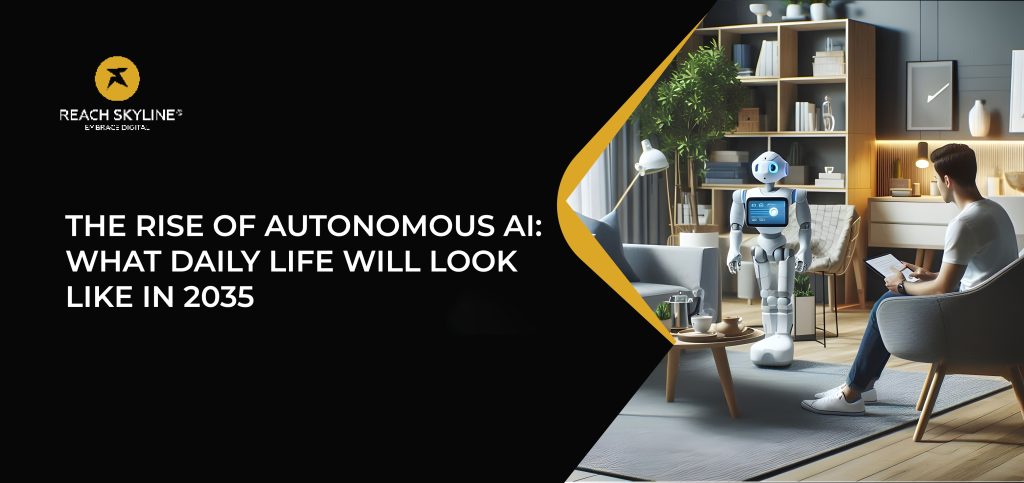
The Rise of Autonomous AI: What Daily Life Will Look Like in 2035
AI

The Rise of Autonomous AI: What Daily Life Will Look Like in 2035

Life in the AI Era By 2035, living alongside artificial intelligence will feel as natural as using electricity today. Most people will share their daily lives with some form of AI companion, an intelligent presence that understands habits, health patterns, emotional states, and long term goals. Mornings may begin without alarms, as AI systems gently wake individuals at the optimal moment, having already reviewed biometric data, optimized nutrition plans, coordinated schedules, and resolved conflicts before the day begins. Human and AI interaction will move far beyond screens. Augmented reality lenses, conversational agents, and early neural interfaces will allow AI to blend seamlessly into everyday life. Just as smartphones reshaped communication and behavior in the 2010s, personalized autonomous AI systems will become constant collaborators in the 2030s, quietly shaping decisions, routines, and relationships. The impact of AI relationships will be subtle yet profound, influencing how people manage stress, make choices, and understand themselves. Work life will also evolve dramatically. Many routine cognitive tasks such as planning, reporting, coordination, and optimization will be handled by autonomous AI. Humans will increasingly focus on creative problem solving, ethical judgment, and interpersonal connection. Productivity will no longer be measured by hours worked, but by insight, originality, and emotional intelligence. Healthcare Transformed Healthcare will undergo one of the most significant transformations of the AI era. By 2035, medicine will shift decisively from reactive treatment to predictive prevention. Autonomous AI systems will continuously analyze genomic data, environmental exposure, lifestyle patterns, and medical history to identify health risks years before symptoms appear. Disease will no longer be something we wait to treat. It will be something we actively anticipate and prevent. Treatments will be tailored at an unprecedented level. Digital twins, virtual models that accurately mirror an individual’s biology, will allow doctors and AI systems to simulate therapies before applying them in the real world. Robotic surgeries guided by AI will achieve precision beyond human limits, reducing recovery times and improving outcomes. Despite these advances, human doctors will remain essential. Their role will shift from processing data to interpreting experience, combining AI insights with empathy, ethical reasoning, and contextual understanding. Emotional intelligence AI may assist in mental health care and elder support, but trust, compassion, and human connection will remain central to healing. Education Reimagined Education in 2035 will look nothing like the standardized classrooms of the past. Autonomous AI tutors will guide students individually, adapting lessons to personal learning styles, emotional states, and curiosity levels. Education will become fluid rather than fixed, evolving with each learner’s pace and interests. Complex ideas will come alive through immersive simulations, virtual laboratories, and augmented reality environments that transform abstract concepts into lived experiences. A student studying climate science may explore digital ecosystems, while another learning history may walk through realistic reconstructions of ancient civilizations. Geography and economic background will no longer determine educational access. A child in a remote village will receive the same quality of instruction as one in a global capital. Teachers will not disappear but will evolve into mentors, focusing on ethics, creativity, emotional development, and critical thinking. Education will become not only universal, but deeply personalized and human centered. As autonomous AI becomes woven into every aspect of life, the choices made today will shape the world of 2035. Governments, educators, businesses, and individuals must actively engage with how AI is designed, governed, and used. Now is the time to invest in ethical AI literacy, protect human autonomy, and ensure emotional intelligence grows alongside machine intelligence. The future should not be left to algorithms alone. It must be guided by human values, responsibility, and purpose.https://reachskyline.com/ Human Autonomy and Identity in an AI World As autonomous AI becomes embedded in daily life, questions of human autonomy and AI human identity will move to the forefront. When machines can recommend decisions, anticipate needs, and influence emotions, the line between assistance and dependence may blur. Some individuals may surrender decision making authority to AI systems in exchange for convenience and efficiency. Others will resist, valuing independent judgment even when it is less optimized. Society may divide along these lines, creating new forms of AI polarization where attitudes toward technology shape culture, opportunity, and power. Human identity may increasingly be defined not by productivity, but by values such as empathy, creativity, ethics, and purpose. AI will reshape what humans do, but humans must decide who they choose to be. Governance and Society Governments will increasingly rely on AI to model policy outcomes before decisions are implemented. Urban planning, climate adaptation, economic reform, and public health strategies will become more data driven and foresight oriented. Autonomous AI systems will allow leaders to simulate multiple futures and identify unintended consequences early. However, the same technologies that promise efficiency also carry serious risks. Systems capable of optimizing traffic could enable mass surveillance. Algorithms designed to stabilize economies could reinforce existing biases. The defining challenge of governance in the AI era will not be technological, but ethical. Ensuring transparency, accountability, and human oversight will determine whether AI strengthens democracy or undermines it. Science and Exploration AI will become humanity’s most powerful engine of discovery. Autonomous systems will accelerate research across disciplines, from discovering new materials and energy sources to advancing climate modeling and medical science. Problems once considered unsolvable may yield to AI driven experimentation and discovery. In space exploration, autonomous probes powered by AI will travel far beyond the reach of real time human control, making independent decisions as they explore distant planets and star systems. Knowledge will expand exponentially, with AI acting not just as a tool, but as a collaborator in human curiosity. The Human Question Perhaps the most profound transformation will be existential. As machines learn to think, create, and simulate empathy, humanity will be forced to confront a fundamental question. What does it mean to be human? By 2035, this question will no longer be abstract. Some will embrace AI as a partner, others as a tool, and some as a rival. Emotional intelligence AI may offer companionship

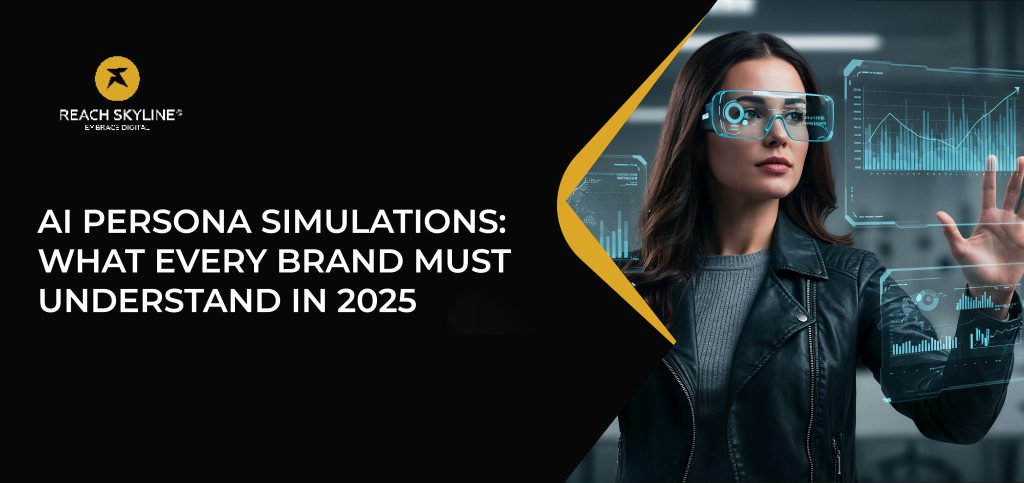
AI Persona Simulations: What Every Brand Must Understand in 2025
Uncategorized

AI Persona Simulations: What Every Brand Must Understand in 2025

The world of branding, training and business development is transforming faster than ever, and at the center of this evolution is one powerful shift.The rise of AI persona simulations. For companies investing in personalized learning, corporate training, HR training and development, and future ready brand strategy, AI personas have become indispensable tools. In 2025, brands cannot compete without deeply understanding their audience. However, traditional customer personas are no longer enough. Markets shift every week, employees learn differently, and digital behaviour changes faster than manuals can keep up. This is where AI persona simulations step in, offering dynamic, predictive and hyper realistic insights that shape better decisions in branding, HR development training, corporate learning and customer experience. In this blog, we explore how AI persona simulations work, why they are changing everything, and what every brand should understand before 2025. What Are AI Persona Simulations? AI persona simulations are digital, intelligent and behaviour driven profiles that act and respond like real customers, real employees or real learners. Instead of static documents describing demographics, AI personas behave — they learn, adapt, react, make decisions and showcase emotional and logical responses based on real time data. These simulations are designed using machine learning, behavioural data, psychographic patterns and predictive modelling. They can represent: This makes AI persona simulations valuable across industries such as corporate training, HRM, customer experience, product development and branding. Why AI Persona Simulations Matter for Modern Brands 1. Customers are no longer predictable Digital behaviour changes daily. A customer’s motivations today may shift tomorrow based on trends, mood, lifestyle or economic changes. Traditional persona templates simply cannot keep up. AI persona simulations constantly update themselves using new data, helping brands stay ahead of customer needs. 2. HR training and development is becoming behavior driven For HR managers, trainers and corporate instructors, understanding employee behaviour is more important than ever. AI persona simulations help identify: This leads to better personalized learning strategies and improved employee training outcomes. 3. Corporate training needs personalization Generic training programs do not work anymore. Employees expect learning that feels tailored to their role, skill level and goals. AI persona simulations help trainers create: This improves retention, engagement and long term performance. 4. Brands need deeper audience understanding Marketing teams use AI personas to simulate customer journeys, purchasing behaviour and emotional triggers. This helps brands: How AI Persona Simulations Work AI persona simulations are generated using a blend of: The system learns continuously, meaning the persona becomes more accurate, realistic and useful over time. If your brand wants to elevate learning, training or customer strategy, now is the time to integrate AI persona simulations.Want a customized AI persona blueprint for your brand, HR team or employees?Let our experts help you build the future of training and branding with AI.https://reachskyline.com/ AI Persona Simulations in HR, Learning and Corporate Development 1. Transforming HR training and development HR teams can use AI personas to simulate: This leads to more effective HR management training and development outcomes. 2. Personalized learning in corporate environments AI personas help trainers understand what kind of environment each employee learns best in. This is powerful for building: 3. Training and development in HRM AI persona simulations ensure HRM teams can design training programs that are: 4. Corporate trainers and instructors benefit as well Corporate instructors can create real world simulations using AI personas to mimic: This enhances practical learning and decision making skills. 5. The future of personal learning As personalized learning becomes the norm, AI personas will be embedded in every learning platform to guide, coach and adapt to individual needs. What Brands Must Understand Before 2025 1. AI personas are not templates They are living, learning, evolving models. 2. They require the right data Quality of output depends on quality of data input. 3. They enhance human work, not replace it Trainers, HR managers and corporate leaders become more effective with AI driven insights. 4. They prepare brands for unpredictable markets AI personas can test campaigns, content, strategies and training effectiveness before actual rollout. 5. They will become mandatory for competitive advantage By 2025, brands relying only on traditional methods will fall behind. Conclusion AI persona simulations are redefining how brands understand customers, train employees and create personalized learning experiences. In 2025 and beyond, every business that invests in HR training and development, corporate training, branding and customer experience must embrace AI driven personas to stay competitive. They offer unmatched insight into behaviour, needs and emotions, helping brands design better learning environments, stronger teams and smarter marketing strategies. AI persona simulations are not the future. They are happening now. Frequently Asked Questions (FAQ)

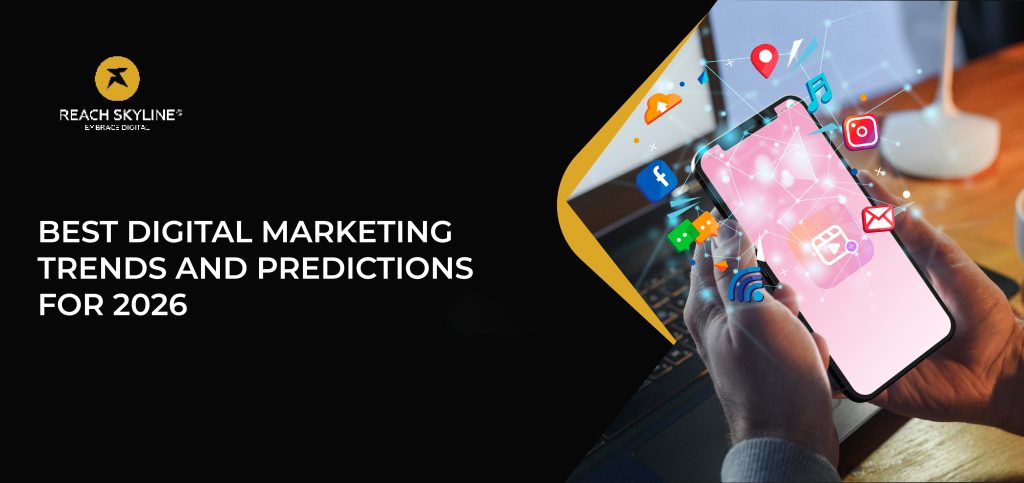
Best Digital Marketing Trends and Predictions for 2026
Digital Marketing

Best Digital Marketing Trends and Predictions for 2026

In the fast-paced digital hubs of India—from the tech parks of Bangalore to the corporate towers of Gurgaon and Mumbai—the marketing landscape is shifting beneath our feet. If you thought 2025 was fast, 2026 is set to be a year of radical transformation. We are no longer just talking about social media posts; we are talking about AI mode browsers, hyper-realistic content generation, and a complete overhaul of how consumers find businesses. As a leading digital marketing agency serving clients all over India, we have seen the waves of change before, but this one is different. The tools have changed. The audience has changed. Even the vocabulary has changed (who knew a “Banana” would be the biggest tech term of the year?). For business owners, the question is no longer “Should we do digital marketing?” but “How do we survive the future of artificial intelligence in marketing?”  Why “Good Enough” is Dead The era of generic content is over. With the rise of Gen Z and Gen Alpha, the threshold for attention is higher than ever. These generations do not just consume; they scrutinize. They can smell a generic stock image or a robotic ChatGPT caption from a mile away. To capture their attention, your branding must be flawless. This is where the new wave of information communication technology meets creativity. It is not enough to just have a Facebook page. You need a comprehensive social media marketing strategy that leverages the latest tools—like the viral Gemini Nano Banana (Google’s latest image model)—to create visual assets that stop the scroll. If your digital marketing company isn’t talking to you about these tools, you are already falling behind. Is your current marketing strategy failing to engage younger audiences? Don’t let your brand become obsolete. Click Here to Audit Your 2026 Strategy with India’s Leading Digital Experts. The New Stages of Influencer Marketing One of the most critical shifts in 2026 is the evolution of Influencer Strategies. We are moving away from the “spray and pray” method of paying celebrities for a single post. The new model focuses on deep, “niche authority.” The Rise of Niche Authority In 2026, a system administrator with 5,000 loyal followers on LinkedIn is more valuable to a B2B tech brand than a lifestyle celebrity with a million followers. This is the era of the “Nano-Influencer.” These experts hold genuine sway over purchasing decisions because they possess technical credibility. For sectors like health tech or building information modeling, partnering with these subject-matter experts is the only way to cut through the noise. Co-Creation Over Sponsorship The relationship between brands and creators has also changed. It is no longer about a simple transaction. It is about co-creation. Gen Z and Gen Alpha audiences expect their favorite creators to be involved in the product development process. A successful social media marketing agency will now facilitate long-term partnerships where influencers help design the content strategy rather than just acting as billboards. This deep integration builds trust that traditional ads simply cannot buy. Strategic Planning for AI Products If you are launching or marketing an AI product in 2026, the old playbook will not work. You need specific planning help for AI products that addresses the unique challenges of trust and utility. Marketing “Agentic AI” The buzzword for 2026 is “Agentic AI.” This refers to AI that doesn’t just chat but actually performs tasks—like booking flights or analyzing data—on the user’s behalf. Marketing these tools requires demonstrating reliability. Your branding agency must shift the narrative from “Look what this AI can generate” to “Look what this AI can do for you.” Case studies and live demonstrations of the AI performing complex workflows become your most powerful marketing assets. Generative Engine Optimization (GEO) This is the biggest technical shift in search engine optimization company strategies. You are no longer just optimizing for Google’s blue links; you are optimizing for AI answers. When a user asks an AI model like Gemini or ChatGPT for the “best e-commerce digital marketing tool,” the AI acts as the gatekeeper. To ensure your product is recommended, your digital marketing website must be structured with high-authority technical content that these AI models cite as factual sources. This requires a new kind of content strategy that prioritizes data, white papers, and expert verification over simple keyword stuffing. The Integration of Tech and Human Creativity The biggest mistake businesses make is thinking AI replaces the human touch. It does not. It amplifies it. Gen Z and Gen Alpha crave authenticity. They want to see the real people behind the digital marketing services. Your social media marketing agency should be using AI to handle the data crunching—analyzing AI mode search behaviors and optimizing e commerce digital marketing funnels—so that the humans can focus on storytelling. Whether you are a startup in Pune or an enterprise in Delhi, the integration of Information Communication Technology into your marketing stack is non-negotiable. You need a seo agency that understands technical schemas, a branding agency that understands Gemini Nano visuals, and a strategic partner who can tie it all together. 5 Predictions for 2026 You Cannot Ignore We see five distinct trends shaping the immediate future. First, On-Device AI will become king, with tools like Gemini Nano making mobile marketing faster and more personalized than ever before. Second, visual consistency will become a standard requirement for branding, driven by the “Banana” trend where AI models maintain character consistency across thousands of images. Third, we predict that B2B Influencers will dominate. Niche experts, such as a respected System Administrator, will drive more sales than mainstream celebrities in the tech sector. Fourth, Interactive Content will be non-negotiable, as Gen Z and Gen Alpha demand to co-create content rather than passively consume it. Finally, SEO marketing will fragment into hyper-specific niches like “Video SEO” and “Voice SEO,” requiring a much more targeted approach. Conclusion:  Don’t Slip on the Trends The year 2026 offers massive opportunities for those willing to adapt. From leveraging Building Information Modeling marketing trends

Scroll to Top