RS logo Bg-black

Author name: Reach Skyline

How AI Is Reshaping Content Creation and Optimization
AI

How AI Is Reshaping Content Creation and Optimization

Content creation has always been at the heart of digital marketing. From blog posts and social media updates to emails and website content, brands rely on strong content to connect with their audience. But with the growing demand for consistency and speed, creating high-quality content every day can feel overwhelming. This is where AI is quietly reshaping how marketers approach content creation and optimization. Today, many teams use AI tools to support planning, writing, and improving content. Instead of replacing creativity, AI helps marketers work faster, stay organized, and build a stronger content strategy that actually performs. The Shift in Modern Content Creation The expectations around content have changed. Audiences want useful, relevant, and engaging content across multiple platforms. This means brands must produce blog posts, social media content, and campaigns regularly. Managing everything manually can slow teams down. AI tools for content creation help simplify this process. They support idea generation, research, writing, and optimization. Marketers can use these tools to speed up production while still keeping their brand voice and creativity at the center. This shift allows teams to focus less on repetitive tasks and more on planning a clear content creation strategy that aligns with business goals. Building a Strong Content Strategy with AI A strong content strategy starts with understanding what your audience needs and how your content supports those needs. AI can help marketers analyze trends, search behavior, and engagement patterns. This makes it easier to create content that resonates with the right audience. When planning a content creation strategy, AI can assist with: With these insights, marketers can plan smarter campaigns and create content that performs better across platforms. Smarter Blog Post Creation Writing blog posts consistently takes time and effort. AI tools for content creation can help with outlining topics, structuring articles, and suggesting improvements. Instead of starting from scratch, marketers can build on AI-generated drafts and refine them to match their tone and message. AI also helps optimize blog posts by suggesting keywords, improving readability, and making content more search-friendly. This helps businesses publish useful, well-structured articles more consistently without feeling rushed. Improving Social Media Content Strategy Social media requires a steady flow of engaging content. Planning posts, writing captions, and tracking performance can become overwhelming. AI supports social media content strategy by helping marketers generate ideas, plan calendars, and analyze engagement. With AI, teams can: This helps marketers stay consistent and relevant without spending hours managing each platform manually. Content Optimization Made Easier Creating content is only one part of the process. Optimizing content so it performs well is just as important. AI helps marketers refine their content by analyzing readability, keyword usage, and audience engagement. AI can support optimization by: This makes it easier to improve both new and existing content without constantly guessing what works. Supporting Creativity, Not Replacing It One common concern is whether AI will replace human creativity. In reality, AI works best as a support tool. It handles repetitive tasks like research and analysis, allowing marketers to focus on storytelling, ideas, and strategy. A balanced approach works best—using AI tools for content creation to speed up processes while keeping human creativity at the center of the content strategy. Businesses that want to strengthen their content planning and execution can explore expert support from Reach Skyline to build smarter and more effective strategies. The Future of Content Creation As technology continues to evolve, AI will play an even bigger role in shaping content creation and optimization. Marketers will rely more on AI to understand audiences, plan campaigns, and improve performance. However, the human touch will always remain essential for building trust and connection. Businesses that combine smart tools with thoughtful planning will be able to create stronger content, maintain consistency, and adapt quickly to changing trends Conclusion AI is reshaping how marketers approach content creation and optimization. From planning blog posts to building a social media content strategy, AI tools make it easier to create, manage, and improve content. They help marketers save time, stay consistent, and make better decisions based on real insights. By using AI tools for content creation alongside a clear content creation strategy, businesses can produce meaningful content that connects with their audience and supports long-term growth. FAQ :
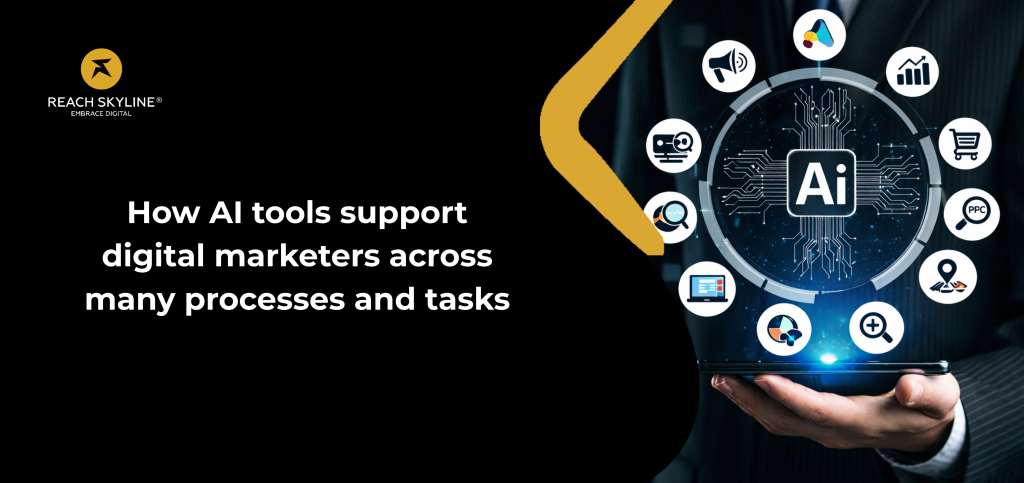

How AI tools support digital marketers across many processes and tasks
AI, Digital Marketing

How AI Tools Support Digital Marketers Across Many Processes and Tasks

Digital marketing has evolved quickly in the last few years. Marketers today handle content, ads, analytics, social media, and customer engagement all at once. Managing everything manually can feel overwhelming. This is where marketing AI is making everyday work easier. From planning campaigns to analyzing results, AI tools for digital marketing help professionals save time, reduce manual work, and make better decisions. Many teams now rely on digital marketing with AI to stay consistent, productive, and competitive. This blog explains how AI tools support digital marketers across many processes and tasks and how they are becoming part of daily marketing workflows. 1. Smarter Content Creation and Planning Creating regular content can be tiring. Blogs, social media posts, emails, and ad copy all need attention. AI tools for content creation help marketers move faster and stay consistent. AI tools can support marketers by: Instead of starting from scratch, marketers can use an AI tool for digital marketing to build a base and then refine it with their own brand voice. This saves time and makes content planning less stressful. Impact: Faster content production and better consistency across platforms. 2. SEO and Keyword Optimization Support SEO takes ongoing effort. Researching keywords, optimizing content, and tracking rankings can consume a lot of time. AI tools for marketing simplify this process. They help by: With AI tools for digital marketing, teams can understand what audiences are searching for and adjust content accordingly. This makes digital marketing using AI more data-driven and effective. Impact: Better search visibility and stronger organic traffic strategies. 3. Data Analysis and Insights Marketing produces a lot of data—campaign metrics, engagement numbers, traffic reports, and more. Reviewing everything manually can feel overwhelming. AI helps marketers by: Using digital marketing with AI, marketers can quickly understand what’s working and what needs adjustment. Instead of spending hours reviewing spreadsheets, they get clear insights in minutes. Impact: Faster decision-making and smarter strategies. 4. Advertising and Campaign Optimization Running ads requires constant monitoring. Budgets, targeting, and performance all need attention. AI tools for digital marketing help simplify ad management. They support marketers by: An AI tool for digital marketing can adjust campaigns in real time to improve results. This reduces wasted ad spend and helps teams manage campaigns more efficiently. Impact: Higher return on investment and better campaign performance. 5. Personalization and Customer Experience Customers expect brands to understand their needs. Digital marketing using AI helps deliver more personalized experiences. AI can support personalization by: Personalized communication makes customers feel understood and valued. It also improves engagement and conversions. Impact: Stronger customer relationships and better engagement. 6. Social Media Management Managing multiple social media accounts daily can be exhausting. AI tools for marketing make social media workflows easier. They help by: With tools for digital marketing powered by AI, marketers can stay consistent online without spending hours posting manually. Impact: Improved consistency and better social media performance. 7. Marketing Automation Repetitive tasks take up a lot of time. AI tools for digital marketing allow marketers to automate many processes. Automation can include: This allows teams to focus more on creative and strategic work instead of routine tasks. Automation also ensures customers receive timely communication. Impact: Better productivity and time management. 8. Better Decision-Making and Strategy AI doesn’t just help with execution—it also helps with planning. AI tools for marketing analyze data and predict outcomes, helping marketers plan stronger campaigns. They support strategy by: With digital marketing with AI, decisions become more data-based rather than guesswork. Impact: Stronger long-term marketing strategies. 9. Using AI to Strengthen Your Marketing Growth As AI becomes part of everyday marketing, many businesses look for expert support to implement the right tools and strategies effectively. Working with experienced digital marketing professionals can help you choose the right AI tools for digital marketing, streamline campaigns, and scale your growth faster. If you’re looking to improve your digital marketing strategy and make better use of AI-driven solutions, you can explore expert support and services here:https://reachskyline.com/ Impact: Access to the right strategy, tools, and support to scale marketing results. The Future of AI in Digital Marketing AI adoption will continue to grow. More businesses are integrating AI tools for digital marketing into daily workflows. In the future, we can expect: Digital marketing with AI is becoming a normal part of how marketing teams operate. Conclusion AI tools are supporting digital marketers across many processes and tasks. From content creation and analytics to advertising and automation, they help teams work faster and more efficiently. Digital marketing using AI is not about replacing marketers, it’s about helping them do their work better and with less stress. FAQ :

Moltworker vs Cloud-Hosted AI Agents
AI

Moltworker vs Cloud-Hosted AI Agents

Artificial Intelligence is no longer a future concept but a present-day necessity for businesses aiming to grow efficiently. AI agents can automate repetitive tasks, analyze vast amounts of data, and even interact with customers, freeing teams to focus on strategic initiatives. Among the popular solutions, Moltworker AI and cloud-hosted AI agents are often compared by companies looking for efficiency, scalability, and measurable growth. Choosing the right AI agent can directly impact business productivity, cost-effectiveness, and operational efficiency. While both options bring benefits, their differences make them suitable for different business needs. This guide will help you understand Moltworker vs Cloud-Hosted AI Agents for business growth, so you can make an informed choice for your company. What is Moltworker AI? Moltworker AI is a powerful solution for businesses that need detailed workflow automation and secure data management. One of its main strengths is its flexibility for local or hybrid deployment, allowing companies to run processes on internal systems while leveraging cloud tools when needed. This approach gives businesses control over sensitive information while scaling operations efficiently. Moltworker also provides high customization for specific workflows, enabling companies to adapt the AI to their unique processes instead of using generic solutions. This is especially valuable for organizations handling complex, multi-step tasks where accuracy is crucial. Another advantage is its strong data privacy, as businesses can keep confidential information on-premise, reducing security risks. By integrating seamlessly with local systems and cloud services, Moltworker AI enhances operational efficiency, automates repetitive tasks, and supports productivity, making it a reliable choice for companies focused on growth and precision. What are Cloud-Hosted AI Agents? Cloud-hosted AI agents are designed for businesses that need quick deployment and minimal setup, making them an excellent choice for companies looking to implement AI without heavy technical investment. Their cloud-based infrastructure allows organizations to scale operations easily as demand grows, without the need for additional hardware or complex installations. This scalability ensures that businesses can handle increasing workloads efficiently and respond to changing market needs quickly. Another key advantage is accessibility: cloud AI agents can be used from anywhere with an internet connection, enabling remote teams to collaborate seamlessly and maintain productivity across locations. Because the service provider manages updates, maintenance, and security, companies can focus on core operations rather than IT overhead. Cloud-hosted AI agents are especially effective for standardized workflows and customer-facing tasks, providing consistent performance and reliability. This combination of speed, scalability, and ease of use makes cloud AI a practical choice for growth-oriented businesses. AI Solutions for Business Efficiency: Moltworker vs Cloud AI Businesses today rely on AI solutions to streamline operations, reduce costs, and improve productivity. Both Moltworker and cloud-hosted AI agents offer unique advantages, helping companies automate tasks, optimize workflows, and drive measurable growth. Choosing the right solution depends on your operational needs and priorities. Key Benefits: How AI Agents Drive Business Growth AI agents improve business performance in multiple ways. They automate manual workflows, provide insights that support better decision-making, and enhance customer experiences with instant responses. Companies using AI agents often see reduced operational costs and faster turnaround times on projects. For businesses evaluating AI, give a look to Reach Skyline to provide guidance on implementing tools like Moltworker and cloud-hosted AI agents effectively. By leveraging these solutions, companies can focus more on innovation and less on repetitive administrative tasks, which ultimately drives revenue growth and improves team productivity. Choosing Between Moltworker and Cloud-Hosted AI Agents Selecting the right AI solution is crucial for business efficiency. Moltworker and cloud-hosted AI agents each have unique strengths, and understanding these differences helps companies optimize workflows, improve productivity, and drive growth. The choice depends on control, customization, scalability, and operational priorities. Key Considerations: Benefits of Moltworker AI Moltworker AI is suitable for companies that value control and integration with existing systems.  By automating multi-step processes, it reduces errors and frees employees for higher-value tasks. Its strong privacy features ensure sensitive information remains protected while improving workflow efficiency. Benefits of Cloud-Hosted AI Agents Cloud-hosted AI agents help businesses scale quickly without investing in extra hardware or IT resources. Automatic updates and maintenance simplify operations, while accessibility from any location ensures teams can collaborate efficiently. They are ideal for standard processes or customer engagement tools. Choosing between Moltworker AI vs cloud-hosted AI agents for business growth depends on company priorities. Moltworker excels in data control and complex workflow automation, whereas cloud-hosted AI offers scalability and ease of access. Many companies combine both to maximize efficiency, reduce costs, and enhance customer experiences. By understanding the strengths of each, businesses can make smarter technology decisions. FAQ

How GPT-5.2 Sets a New Benchmark in AI Industry
AI, Branding and Creative Agency, Market Automation

How GPT-5.2 Sets a New Benchmark in the AI Industry

Artificial intelligence is moving fast, and every new generation of AI raises the bar for what technology can do. The latest developments around OpenAI ChatGPT and GPT-5.2 show how AI is shifting from simple text generation tools to reliable, context-aware assistants that people can actually use in daily work and business. Today, tools like the ChatGPT chatbot are no longer just experimental or fun to try. They are becoming part of everyday workflows for marketers, students, business owners, and professionals. GPT-5.2 reflects this shift by focusing on accuracy, usability, and real-world performance. For people exploring free OpenAI tools, other ChatGPT platforms, or next-generation AI systems, this evolution matters more than ever. The Evolution of ChatGPT and Modern AI To understand why GPT-5.2 matters, it helps to look at how conversational AI has grown. Early AI tools often struggled with context and produced generic or confusing responses. Over time, OpenAI ChatGPT improved the way machines understand language and interact with users. As more people began searching for terms like ChatGPT OpenAI, explain ChatGPT, or ChatGPT chatbot, it became clear that users wanted AI that feels natural and actually helps with real tasks. From writing content to answering questions and assisting with research, AI tools started becoming more practical. GPT-5.2 builds on that progress. It focuses on deeper understanding, better context handling, and more consistent results. Instead of just responding to prompts, it aims to understand intent and provide meaningful support for both individuals and businesses. What Makes GPT-5.2 Different GPT-5.2 is not just another update. It represents a more mature stage of AI development where performance, reliability, and usability are key priorities. Whether someone is using free OpenAI tools or comparing other ChatGPT platforms, several improvements stand out. Better Reasoning and Context One of the biggest improvements in GPT-5.2 is how well it understands context. It can follow longer conversations, process complex instructions, and give more structured responses. This makes it easier for users to rely on AI for real work instead of just quick answers. For example, businesses using a ChatGPT chatbot for customer support or marketing can now expect more accurate and helpful replies. Users who want to explain ChatGPT to beginners often describe it as a smart assistant that learns from conversation and responds in a more human-like way. GPT-5.2 takes that experience further by reducing confusion and improving clarity. Real Business Use Cases AI is no longer limited to tech companies. Many organizations now use AI tools to improve productivity and streamline tasks. GPT-5.2 supports a wide range of applications such as content creation, customer service, data analysis, training, and workflow automation. Companies exploring ChatGPT OpenAI solutions are integrating AI directly into their daily operations. Instead of using AI occasionally, they are making it part of their regular processes. The improved performance of AI 5.2 makes it suitable for professional environments where consistency and reliability matter. Multimodal Capabilities Another reason GPT-5.2 stands out is its ability to work with more than just text. It can interpret information across different formats such as documents, images, and structured data. This makes it easier for users to analyze information, create content, and generate insights from multiple sources. For those comparing other ChatGPT tools, this flexibility is becoming an important factor. Modern AI systems are expected to handle various types of input, and GPT-5.2 reflects that growing expectation. Improved User Experience As AI becomes more accessible, more people are trying free OpenAI tools and experimenting with AI platforms. GPT-5.2 focuses on making interactions smoother and more reliable. Responses are faster, more relevant, and easier to understand. Whether someone is using a ChatGPT chatbot for writing, learning, or customer engagement, the overall experience feels more natural. This improved usability helps build trust and encourages wider adoption. Industry Impact Marketing and Content Creation AI has changed how content is created. Marketers now use OpenAI ChatGPT to write blogs, ads, and social media posts more efficiently. With GPT-5.2, content feels more contextual and consistent, helping brands maintain quality while producing content at scale. Education and Learning Students and educators often search for ways to explain ChatGPT and understand its role in education. GPT-5.2 acts like a digital learning assistant. It can explain topics, generate notes, and help with research. Its stronger reasoning makes it especially helpful for complex subjects. Customer Support Many businesses use a ChatGPT chatbot to handle customer questions. GPT-5.2 improves this experience by understanding intent more clearly and offering more useful responses. This leads to faster support and better customer satisfaction. Research and Productivity Professionals across industries use AI to summarize documents, generate ideas, and assist with decision-making. GPT-5.2 supports these tasks more effectively by providing accurate and structured information. It becomes a productivity partner rather than just a tool. Why GPT-5.2 Sets a New Benchmark GPT-5.2 represents a turning point where AI moves from experimental technology to dependable support. People exploring AI 5.2 or GPT 5.2 tools are often looking for solutions that combine intelligence with real-world usability. Some of the key reasons it sets a new benchmark include stronger reasoning, better context awareness, improved reliability, and broader capabilities. It integrates more easily into business tools and workflows, making it useful across industries. As more users search for ChatGPT OpenAI tools or compare other ChatGPT platforms, expectations continue to grow. GPT-5.2 meets those expectations by offering a balanced mix of performance and practicality. The Future of AI After GPT-5.2 The development of GPT-5.2 shows that AI is becoming more collaborative. Instead of replacing human effort, it works alongside people to improve productivity and creativity. From content creation to decision support, AI tools are becoming part of everyday tasks. People looking for free OpenAI options or trying to explain ChatGPT to others will likely see even more improvements in the future. AI will continue to evolve with better personalization, smarter automation, and deeper integration into daily workflows. Conclusion GPT-5.2 sets a new benchmark in the AI industry by combining advanced reasoning, improved usability, and practical applications. As OpenAI ChatGPT continues

The Role of AI in Learning and Building Coding Skills
AI

The Role of AI in Learning and Building Coding Skills

Learning how to code used to feel overwhelming for many people. It often meant reading long textbooks, watching endless tutorials, and spending hours trying to fix errors without knowing what went wrong. Today, things are changing. With the rise of ai coding tools, learning programming has become more interactive, supportive, and far less intimidating. AI is not just automating tasks. It is helping people understand coding better, practice more effectively, and get help with coding exactly when they need it. Whether someone is a student, a self-learner, or a professional developer, ai for coding is making the learning journey smoother and more accessible. How AI Is Changing the Way We Learn Coding Anyone who has tried to learn programming knows that mistakes are part of the process. But getting stuck on errors can be frustrating, especially for beginners. This is where ai in programming makes a big difference. Instead of searching through forums for hours, learners can now use coding ai tools that act like real-time assistants. These tools can look at your code, explain what went wrong, and suggest how to fix it. They can also guide you step by step so you understand the logic rather than just copying a solution. An ai tool for coding can adjust to different skill levels. If you are just starting with HTML or Python, it can give simple explanations. If you are more advanced, it can help optimize code or suggest better approaches. This flexibility makes learning feel less stressful and more engaging. Learning at Your Own Pace One of the best things about using ai for developers and learners is the freedom to learn at your own pace. Everyone learns differently. Some people like detailed explanations, while others prefer to learn by building projects and experimenting. AI supports both approaches. You can ask questions anytime, try new code, and get instant feedback. It feels a bit like having a tutor available all the time. This is especially helpful for people who are learning on their own and may not have access to a mentor. Because of this, more people are able to stay consistent with their learning and build confidence over time. Making Debugging Less Frustrating Debugging is often the hardest part of coding. Error messages can be confusing, and beginners may not know where to start. With ai for coding, debugging becomes easier and more understandable. Instead of just showing an error, AI can explain why it happened and suggest ways to fix it. An ai tool for code might also recommend better practices or show an improved version of the code. This helps learners understand what they are doing and why it matters. Over time, this builds stronger problem-solving skills and helps learners become more independent. Building Real Skills Through Practice Coding is not something you learn only by reading. You learn by building things. AI helps make this process smoother by guiding learners while they work on projects. For example, if you are building a website, AI can suggest layout improvements or help fix styling issues. If you are learning Python, it can help you write scripts and improve them. Using ai coding tools in this way makes practice more effective and less overwhelming. It also helps learners create real projects they can include in their portfolios, which is important for career growth. Supporting Self-Learners and Career Changers Many people today are learning coding on their own to switch careers or improve their skills. While online courses and tutorials are helpful, learners often need extra support when they get stuck. This is where ai tool for coding platforms become very useful. With AI, learners can practice regularly, explore new programming languages, and prepare for technical interviews. AI provides guidance without replacing the effort needed to truly understand coding. For aspiring developers, ai for developers tools make it easier to stay motivated and keep improving. AI as a Partner, Not a Replacement Some people worry that AI will replace programmers. In reality, AI is more like a partner. It helps with repetitive tasks, suggests improvements, and speeds up development. But creativity, logic, and decision-making still come from humans. For learners, this means AI can support the learning process but cannot replace the need to think and practice. Writing your own code, testing it, and learning from mistakes are still essential steps in becoming a good developer. AI works best when it is used as a guide rather than a shortcut. Using AI Wisely While Learning While ai in programming is helpful, it is important not to rely on it too much. Copying code without understanding it can slow down real learning. A better approach is to read AI suggestions carefully, try writing code independently, and focus on understanding the logic behind each solution. Balancing AI assistance with your own practice helps build stronger skills and confidence. Looking Ahead AI will continue to play a bigger role in coding education. Future coding ai tools may offer more interactive environments, real-time collaboration, and smarter feedback. Students will be able to build projects, test ideas, and learn faster with guided support. As these tools improve, they will make coding education more accessible to people everywhere. Conclusion AI is changing how people learn and build coding skills. It provides instant feedback, personalized support, and practical guidance that makes programming easier to understand. Whether someone is a beginner exploring ai coding or an experienced developer using ai for developers tools, AI can make learning more efficient and less stressful. The key is to use AI wisely. Think of it as a learning companion that helps you grow rather than a tool that does everything for you. With the right balance, AI can help anyone build strong coding skills and prepare for the future of technology. FAQ

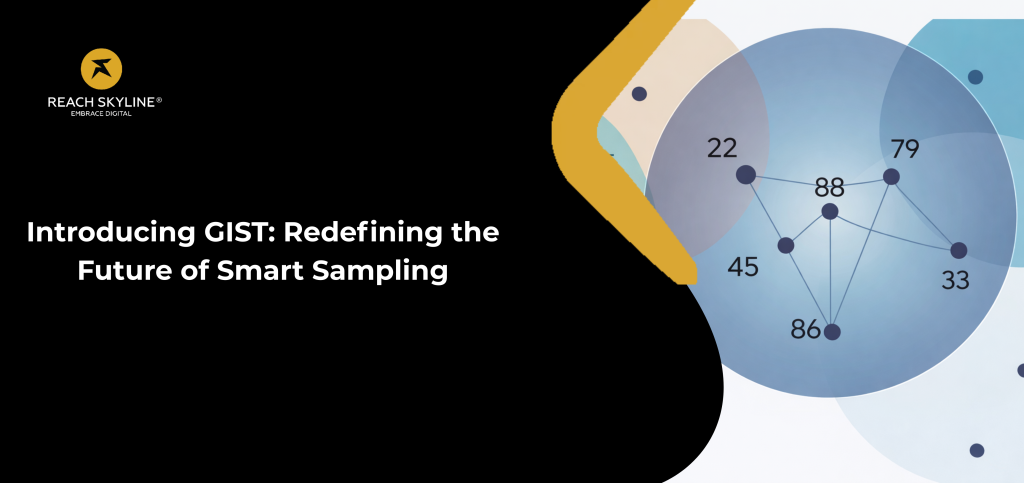
Introducing GIST: Redefining the Future of Smart Sampling
AI, Branding and Creative Agency

Introducing GIST: Redefining the Future of Smart Sampling

In today’s digital world, businesses generate massive amounts of data every second. But collecting the right data is still a big challenge. Traditional sampling methods are often slow, manual, and inaccurate. Many companies rely on outdated tools that fail to capture real-time insights, leading to poor decisions and missed opportunities. As businesses grow, the need for smarter and faster data sampling becomes more critical. This is where GIST comes in. GIST is an AI-powered smart sampling solution designed to transform how companies collect, analyze, and use data. Instead of relying on random or manual samples, GIST uses intelligent algorithms to identify meaningful patterns and deliver accurate insights. This helps businesses understand customers better, predict trends, and make confident decisions. What Is GIST Business Solution? The GIST business solution is an advanced AI-driven platform designed to simplify and improve data sampling for modern organizations. It combines machine learning, automation, and analytics to provide accurate and reliable data samples in real time. Unlike traditional sampling methods, GIST focuses on precision and relevance, ensuring businesses work with high-quality data. GIST helps companies understand customer behavior, market trends, and operational performance. It can be used across industries such as marketing, finance, healthcare, retail, and technology. By delivering intelligent insights, GIST supports smarter decision-making and strategic planning. For modern enterprises, GIST is not just a tool but a foundation for data-driven growth. It reduces manual effort, increases accuracy, and improves the speed of insights. Why Traditional Sampling Fails Businesses Traditional sampling methods often rely on manual processes, limited datasets, and static models. These methods are slow and prone to human errors. Many companies still use spreadsheets, surveys, and basic analytics tools that cannot handle large and complex data sets. Another major issue is bias. Manual sampling can lead to biased data, which affects business decisions. Traditional tools also struggle with real-time data, making it difficult to respond quickly to market changes. As businesses scale, outdated sampling methods become inefficient and costly. This is why companies are moving toward AI-powered smart sampling solutions like GIST. AI Sampling for Business Insights AI sampling for business insights helps companies extract meaningful information from large datasets. It uses machine learning to identify patterns, reduce errors, and improve prediction accuracy. AI-driven sampling enables faster analysis and better decision-making for businesses of all sizes. Key benefits of AI sampling for business insights: Smart Sampling for Business Growth Smart sampling for business enables organizations to use data effectively across departments. Marketing teams can identify customer preferences, sales teams can target high-value leads, and operations teams can optimize workflows. Smart sampling supports strategic planning and improves overall business performance. By using intelligent sampling, companies can reduce risks and improve ROI. It helps businesses understand market trends and customer behavior more accurately. Smart sampling also supports innovation by providing insights for product development and service improvement. Real-World Use Cases for Smart Sampling Smart sampling is used across industries to improve performance and decision-making. Common use cases include: Why Enterprises Need Intelligent Sampling Systems Enterprises face challenges such as data overload, security risks, and compliance requirements. Manual sampling methods cannot handle enterprise-scale data efficiently. Intelligent sampling systems automate data selection and ensure consistent accuracy across departments. GIST helps enterprises manage structured and unstructured data, integrate with existing systems, and provide real-time insights. It reduces operational costs and improves efficiency. Intelligent sampling also supports regulatory compliance and data governance frameworks. Business Intelligence Sampling Tools Explained Business intelligence sampling tools help organizations analyze data and generate insights for strategic planning. GIST integrates with BI platforms to provide accurate and real-time analytics. These tools support dashboards, reports, and predictive models for decision-makers. By combining sampling with BI tools, companies can improve data visualization and performance monitoring. Business intelligence sampling tools enable organizations to track KPIs and identify growth opportunities. Integrating Sampling with Business Intelligence Platforms Integrating GIST with BI platforms enhances analytics capabilities and improves data-driven decisions. Key integration benefits include: How Automation Reduces Business Risk and Cost Automation reduces business risk by eliminating manual errors and bias in data sampling. Key advantages include: Why GIST Is Redefining the Future of Smart Sampling GIST is redefining smart sampling by combining AI, automation, and analytics in a single platform. It provides accurate, scalable, and real-time sampling solutions for modern businesses. Key features of GIST include: The Future of AI-Powered Sampling Technology How Businesses Can Start Using GIST Today AI-powered sampling technology is evolving rapidly. Future trends include real-time predictive analytics, automated decision systems, and smart enterprise platforms. Businesses will rely on AI sampling to optimize operations and improve customer experiences. As digital transformation continues, AI sampling tools like GIST will become essential for competitive advantage. Enterprises will adopt intelligent sampling to drive innovation and strategic growth.For businesses exploring branding, analytics, and digital innovation strategies, creative and strategic frameworks that complement emerging AI-driven tools visit Reach Skyline. Businesses can start using GIST by integrating it with existing analytics platforms and data systems. Steps to adopt GIST: GIST is transforming the future of smart sampling by providing AI-driven, automated, and intelligent data insights. Businesses that adopt smart sampling can make faster decisions, reduce risks, and gain a competitive edge. As data becomes the core of business strategy, AI-powered sampling solutions like GIST will play a crucial role in digital transformation. Frequently Asked Question

AI

How Cloudflare Is Winning the AI and Edge Computing Race

Artificial intelligence is growing fast, and businesses today want AI to work in real time. Traditional cloud computing often sends data to faraway servers, which causes delays. That is why edge computing is becoming the future of AI. Instead of processing data in one central place, edge computing processes it closer to users. Cloudflare is emerging as a strong leader in this space. With its massive global edge network and growing AI platform, Cloudflare is helping developers and businesses run AI faster, safer, and more efficiently. From chatbots to real-time analytics, Cloudflare AI infrastructure is transforming how AI workloads are deployed.  How Cloudflare Edge Network Works Cloudflare edge network works by routing user requests to the closest data center. This ensures faster responses and better reliability. The distributed architecture helps AI applications run smoothly without depending on a single central server. Key features:  Cloudflare AI Infrastructure for Business Development  Cloudflare AI infrastructure is designed to help businesses deploy AI models efficiently at the edge. Instead of sending data to centralized cloud regions, Cloudflare processes AI tasks closer to users. This improves performance and reduces operational costs. AI-based marketing, automation, and customer engagement tools benefit greatly from edge-based AI infrastructure. Businesses can deliver personalized experiences, real-time insights, and intelligent automation with lower latency. Companies focusing on digital growth and automation can integrate Cloudflare AI infrastructure with marketing workflows and automation systems. For example, businesses exploring intelligent automation strategies can learn more about scalable automation frameworks, give a look to the Reach Skyline. Cloudflare plays a major role in modern AI deployment by enabling serverless AI, scalable inference, and secure AI pipelines for enterprises and startups. Key Components of Cloudflare AI Infrastructure Cloudflare AI infrastructure includes several core tools that help developers deploy and manage AI workloads efficiently at the edge. Main components: Cloudflare AI Platform and Its Core Features  The Cloudflare AI platform is a developer-friendly environment that allows businesses to build, deploy, and scale AI applications at the edge. It supports popular AI models and integrates with existing cloud workflows. Developers use Cloudflare AI platform to run inference, manage vector databases, and optimize AI traffic routing. Compared to AWS, Azure, and Google Cloud, Cloudflare focuses more on edge-first AI execution rather than centralized cloud processing. This makes Cloudflare ideal for real-time AI applications where speed and reliability are critical. The platform also provides built-in security, analytics, and scalability, making it attractive for startups and enterprises alike. Cloudflare AI Tools for Developers Cloudflare provides multiple AI tools that simplify development and deployment of AI-powered applications. Cloudflare for AI Workloads – Real-World Use Cases  Cloudflare for AI workloads is widely used in real-world applications. Businesses use it for chatbots, recommendation systems, fraud detection, and real-time personalization. Edge AI helps healthcare platforms analyze patient data faster, fintech companies detect fraud instantly, and e-commerce platforms recommend products in real time. By running AI workloads on Cloudflare edge network, companies reduce latency and improve user experience. This is especially useful for global businesses with users across different regions. Cloudflare ensures consistent performance everywhere. Why Edge AI Is Better Than Centralized AI Edge AI offers multiple advantages compared to centralized AI systems. Benefits: Cloudflare Edge AI Services Driving the Future  Cloudflare edge AI services enable businesses to deploy AI models directly at the edge without managing complex infrastructure. Serverless AI allows developers to focus on building applications instead of managing servers. Real-time AI inference is crucial for applications like voice assistants, autonomous systems, and live analytics. Cloudflare edge AI services provide the speed and scalability required for these advanced use cases. As AI adoption grows, edge-based AI services will become essential for delivering seamless digital experiences. Cloudflare Edge AI vs Traditional Cloud AI Cloudflare edge AI offers several advantages over traditional cloud AI solutions. Comparison points: How Cloudflare Is Beating Competitors in the AI Race  Cloudflare is gaining an edge over competitors due to its distributed architecture and developer-friendly ecosystem. Unlike traditional cloud providers, Cloudflare was built with an edge-first approach. This makes it naturally suited for AI workloads that require low latency. The platform also offers simple pricing, easy integration, and strong security features. Startups and developers prefer Cloudflare because it reduces complexity and speeds up deployment. With continuous innovation in AI tools and infrastructure, Cloudflare is positioning itself as a key player in the AI and edge computing race. Cloudflare vs Other Competitors Cloudflare competes strongly with major cloud providers in AI and edge computing. Key differences: Startups prefer Cloudflare for real-time applications Cloudflare excels in edge performance AWS and Azure dominate centralized cloud services Google Cloud focuses on AI research and ML tools Cloudflare offers simpler deployment and lower latency The Future of Cloudflare Edge Network and AI  The future of Cloudflare edge network and AI looks promising. Edge AI adoption will increase in industries like healthcare, finance, smart cities, and IoT. Cloudflare is expanding its AI platform, GPU partnerships, and developer tools to support next-generation AI applications. Businesses should prepare by adopting edge-first architectures and exploring AI-driven automation. Cloudflare’s roadmap indicates a strong focus on real-time AI, privacy-first AI, and decentralized computing. This will redefine how AI is delivered globally. How Businesses Can Leverage Cloudflare AI Tools Today  Businesses can start using Cloudflare AI tools to improve performance and scalability. From AI-powered websites to automation systems, Cloudflare offers flexible solutions for different industries. Steps to get started: Cloudflare is winning the AI and edge computing race by combining a powerful edge network with modern AI infrastructure and developer-friendly tools. Its edge-first approach makes AI faster, safer, and more cost-effective for businesses worldwide. As AI continues to grow, companies that adopt Cloudflare edge AI services will gain a competitive advantage in performance and user experience. Businesses and developers should explore Cloudflare AI platform and edge computing solutions to stay ahead in the digital era. FAQs About Cloudflare Edge Computing and AI

AI

The Missing Feature ChatGPT Urgently Needs

ChatGPT has quickly become one of the most popular AI tools for businesses, content creators, and everyday productivity. From generating ideas to automating conversations, it has proven to be highly versatile. Yet, despite its capabilities, many users feel there’s one critical feature missing that could make ChatGPT truly indispensable for business growth. This blog explores the missing feature in ChatGPT, highlights its current limitations,   and examines future improvements that could transform how businesses leverage AI. By understanding these gaps, Indian startups and SMEs can make smarter decisions while planning their AI integration. Understanding the Missing Feature in ChatGPT The missing feature in ChatGPT, which many business users wish for, is real-time business intelligence integration. While ChatGPT is excellent at generating content, answering queries, and providing suggestions, it lacks the ability to connect directly to live business data like analytics dashboards, CRM systems, or sales performance tools. For example, a marketing team might want ChatGPT to suggest ad strategies based on real-time customer engagement data or sales trends. Currently, ChatGPT can provide generic advice but cannot analyze live data automatically. This limitation affects decision-making, slows down processes, and can leave businesses relying on multiple tools for insights. By addressing this gap, ChatGPT could move from being a creative assistant to a full-fledged business intelligence partner, providing actionable insights that directly influence growth strategies. Current ChatGPT Limitations for Business Users While ChatGPT has revolutionized digital workflows, businesses still face some challenges when using it. In short, it’s powerful but not fully optimized for complex business operations. These limitations show why businesses often view ChatGPT as an assistant rather than a decision-making tool. Improving insights and integration could dramatically enhance its utility. ChatGPT New Features for Business Development Businesses today also need tools and features that can simplify operations and make work more efficient. This includes automating repetitive tasks like scheduling posts, sending emails, or updating project trackers, as well as offering context-aware recommendations where AI remembers past discussions to give more relevant advice. Collaboration support is another key feature, helping teams work together with real-time suggestions during projects or content creation. Businesses also benefit from industry-specific insights, with recommendations tailored to sectors such as retail, tech, or healthcare. For Indian companies, localization is crucial—AI that understands local market trends, consumer behavior, and language nuances can make strategies far more effective. For businesses looking to enhance AI-driven approaches, branding and creative services can provide a structured plan, integrating tools like ChatGPT to maximize impact. Learn how ReachSkyline can help you combine AI with effective business strategies for sustainable growth. What ChatGPT Needs – Future Features for Business Growth To overcome these limitations, ChatGPT requires several future enhancements. Indian startups and SMEs, which are rapidly adopting digital tools, would benefit immensely from these features: With these improvements, ChatGPT would not only assist in daily tasks but actively contribute to business strategy. Imagine an AI that suggests your next product launch timing based on live customer engagement data or helps optimize ad spend using real-time analytics – the possibilities are immense. Why the Missing Feature Matters for Indian Businesses The missing feature in ChatGPT isn’t just a small gap—it’s something that can really change how businesses work, especially here in India. Startups and small businesses often juggle multiple tasks with limited resources, and AI tools like ChatGPT can be a huge help. But without the ability to connect to live business data, the suggestions it gives are often too general. Take, for example, an online store in Chennai. The owner might want ChatGPT to tell them which products are selling well right now or suggest how to adjust stock levels. Without real-time data, these suggestions are generic, and decisions still need manual research. Even service-based businesses could benefit if AI could understand regional trends and customer preferences. Adding this feature would turn ChatGPT from a helpful assistant into a tool that actually drives smarter, faster business decisions. Problems With ChatGPT and How They Can Be Solved Despite its popularity, ChatGPT comes with some problems that affect its business utility: To overcome these, future updates should include: Solving these issues would make ChatGPT not just a chatbot but a comprehensive business tool, especially for SMEs and startups navigating competitive markets. ChatGPT has already transformed productivity and creativity for businesses worldwide. However, the missing feature of real-time data integration limits its potential for strategic decision-making. By adding this and other enhancements, it can evolve into a powerful tool for Indian SMEs, startups, and global businesses alike. Explore more ways to enhance your business strategy through creative and AI-focused branding at ReachSkyline and stay ahead in the digital era. FAQs About ChatGPT Missing Features

9 Proven Strategies to Boost Agent Productivity
Branding and strategy

9 Proven Strategies for a Contact Center Revolution: Boosting Agent Performance & ROI in the Digital Age

The Silent Crisis in the Contact Center In the dynamic landscape of modern business, the contact center remains the bedrock of customer loyalty. Yet, businesses across India—from thriving e-commerce startups to established financial institutions—face a persistent challenge: agent burnout, high attrition, and underperforming customer service. This isn’t just an HR problem; it’s a monumental barrier to growth and a direct drain on your bottom line. Every customer interaction is a moment of truth, and if your agents are struggling, your brand is too. In a country where personalized service and word-of-mouth reputation carry immense weight, relying on outdated processes and unmotivated teams is a recipe for stagnation. You need more than just a quick fix; you need a comprehensive strategy for agent performance and contact center efficiency that embraces digital transformation and respects the unique demands of the Indian workforce. This guide will walk you through 9+ proven strategies—from foundational frameworks to cultural enrichment—that will not only drastically improve your agents’ productivity but also unlock significant ROI and elevate your entire Customer Experience India. Laying the Foundation for Unstoppable Efficiency Boosting agent performance isn’t about pushing people harder; it’s about making their jobs smarter, simpler, and more rewarding. The following foundational strategies are essential building blocks for a world-class contact center, driving digital transformation by setting clear goals and equipping teams with the right tools. 1. Create a Comprehensive Performance Measurement Framework You can’t manage what you don’t measure. A vague metric like “handle time” is insufficient. A robust performance measurement framework goes beyond simple KPIs (key performance indicators) to include: This framework must be transparent, understood by every agent, and directly tied to continuous feedback and recognition. 2. Use the Right Technology to Help Agents Work Smarter Modern agents should not be toggling between half a dozen applications. Implementing a unified, cloud-based digital marketing agency platform that integrates your CRM, knowledge base, and communication channels (omnichannel) is nonnegotiable. This technology empowers agents with: 3. Streamline Processes and Workflows Inefficient processes are productivity killers. Examine the entire customer journey and every agent workflow to identify bottlenecks. Is the escalation path clear? Is the refund process unnecessarily complex? Use Lean Six Sigma principles to: 4. Empower Agents with the Right Tools Beyond the core technology platform, agents need dedicated tools that enhance their day-to-day effectiveness. This includes a constantly updated, easily searchable knowledge base (a single source of truth) and communication tools that foster seamless internal collaboration (e.g., dedicated channels for subject matter experts). When agents have immediate access to accurate information, their confidence soars, and FCR rates dramatically improve. The Human Element and Cultural Context for Success Technology provides the speed, but people provide the connection. To truly excel, your strategy must foster a culture of growth, motivation, and respect—a crucial factor for managing talent and reducing attrition in the competitive Indian job market. 5. Invest in Meaningful Training and Coaching Initial onboarding is just the starting point. Agent training ROI comes from continuous, personalized coaching. 6. Balance Workloads and Scheduling Unrealistic targets and erratic schedules are the primary drivers of burnout. Effective Workforce Management (WFM) is about balance. 7. Foster Motivation and Engagement A motivated agent is a productive agent. Engagement strategies must be holistic and culturally relevant: 8. Strategic Work-Life Balance Beyond scheduling, create a culture that respects personal time. Agents who feel they have control over their work-life balance are more committed. This includes clear policies on shift extensions and acknowledging local travel and commute challenges that are common in Indian metro cities. If you’re looking to implement these strategies through a robust digital framework and need a partner to optimize your overall digital presence, including the technologies that power your internal operations and external customer journey, learn how we can help your business thrive: Explore Our Digital Transformation Services  Digitizing Customer Service and Measuring True ROI The final two pillars of a high-performance contact center revolve around shifting interactions to digital channels and rigorously tracking the financial impact of every strategy. 9. Create Self-Service Options for Customers The best way to boost agent performance is to ensure agents only handle complex, high-value interactions. Implement robust customer self-service options: 10. Measure ROI and Cost Savings Every investment—in training, technology, and WFM—must be justified by tangible returns. This requires a shift from measuring cost to measuring value. Conclusion: The pursuit of excellence in the contact center is a continuous journey, not a destination. By implementing these nine proven strategies, you are not just fixing broken processes; you are investing in a future where motivated, well equipped agents deliver superior Customer Experience with maximum efficiency. This integrated approach—balancing technology with the human element and grounding it in cultural context—is the definitive path to achieving significant agent performance gains and realizing true, measurable ROI. FAQ

AI and Tech Trends That Will Shape the Future in 2026
AI

AI and Tech Trends That Will Shape the Future in 2026

As we move into 2026, rapid technological advancements continue to reshape industries, business operations, and everyday life. Artificial intelligence, machine learning, and other emerging technologies are becoming essential tools for efficiency, decision-making, and innovation. Understanding AI trends 2026 and emerging technologies 2026 is crucial for businesses and individuals looking to stay ahead of the curve. These innovations are not just changing how companies operate but are also redefining customer experiences, making processes smarter, faster, and more personalized. By keeping track of these developments, organizations can adapt their strategies, optimize resources, and position themselves for long-term growth in an increasingly digital world. AI Trends That Shape the Future AI is no longer a futuristic concept—it is already transforming how businesses and societies operate. The AI and machine learning trends in 2026 will optimize operations, improve personalization, and drive innovation across sectors. Predictive algorithms will help companies anticipate market demands, while intelligent virtual assistants will streamline customer interactions. Automated decision-making will reduce human error and increase efficiency, and AI in healthcare diagnostics will enable faster and more accurate treatments. Smart recommendation systems will personalize shopping, learning, and entertainment experiences, providing users with tailored solutions. As AI continues to evolve, its integration into daily operations will be a critical driver of growth, innovation, and competitive advantage. How AI will change the world in 2026 The latest AI breakthroughs 2026 promise to push the boundaries of what machines can do. Generative AI improvements will enable systems to create content, designs, and solutions with minimal human input. Advanced natural language processing will allow AI to understand and respond to complex queries more effectively. AI in creative fields will assist in art, music, and media production. Reinforcement learning applications will help AI adapt dynamically to changing environments, while autonomous AI systems will handle tasks with minimal supervision. These breakthroughs are set to revolutionize industries, enhance efficiency, and open new opportunities for innovation and business growth in the years to come. Emerging Innovations of Future Technology at 2026 The future technology 2026 landscape is defined by integration, intelligence, and automation. Emerging technologies like IoT, blockchain, and AR/VR are converging with AI to deliver smarter solutions. Key innovations include: Top Tech Innovations in 2026 That Leverage Business Growth Businesses looking to expand and optimize operations are leveraging top tech innovations 2026 to gain an edge. Companies integrating AI, cloud computing, and automation tools can improve decision-making and efficiency. Give a look to Reach Skyline they are helping businesses to implement advanced tech solutions to expand their reach and improve performance. With smart analytics, automated marketing campaigns, and AI-driven customer insights, companies can optimize operations while delivering more personalized experiences. These innovations not only streamline internal workflows but also strengthen customer engagement, giving businesses a competitive edge and the ability to stay ahead in rapidly evolving markets. Emerging Technologies of AI Emerging technologies 2026 are revolutionizing industries with intelligent automation and innovation. Technology Shaping the Future of 2026 Technology shaping the future 2026 is transforming every aspect of life. AI, IoT, and smart systems are redefining how people work, learn, and interact. In education, AI-driven platforms will provide personalized learning experiences. In healthcare, AI-assisted diagnostics and predictive analytics will improve outcomes. Businesses will adopt automation and cloud technologies to streamline workflows and reduce costs. Daily life will become more connected, personalized, and efficient through smart homes, wearables, and AI-powered services. These innovations not only enhance productivity but also support sustainability and smarter infrastructure planning, shaping a future where technology serves as a seamless enabler for society. Future of Robotics and AI The future of robotics and AI is rapidly expanding beyond industrial applications. Collaborative robots, or cobots, will work alongside humans to improve efficiency in manufacturing and logistics. Autonomous delivery systems will revolutionize supply chains, while surgical robots will assist healthcare professionals with precision and safety. AI-powered industrial robots will handle complex tasks with minimal supervision, and home automation robotics will simplify daily routines. This integration of robotics and AI is set to redefine productivity, safety, and convenience, allowing businesses and individuals to focus on higher-value activities while intelligent systems handle routine or complex operational tasks. Tech Trends 2026 in Business Growth Tech trends 2026 are reshaping business strategies across sectors. Organizations are adopting AI, IoT, cloud computing, and blockchain to enhance operations and drive growth. AI-powered marketing helps companies understand and engage customers, while supply chain optimization ensures timely deliveries and reduced costs. Remote collaboration tools and cloud-based platforms enable flexible work arrangements, while digital customer experiences are enhanced through personalization and predictive analytics. Businesses that embrace these trends can increase efficiency, reduce operational costs, and gain a competitive advantage, positioning themselves to thrive in an increasingly technology-driven global market. Integrating AI and Emerging Technologies Businesses and individuals can prepare for artificial intelligence future trends by taking strategic steps: By embracing these strategies, organizations can leverage AI and emerging technologies for sustainable growth and long-term innovation.From intelligent automation to advanced robotics and predictive analytics, these innovations will drive efficiency, personalization, and sustainable growth. Businesses that stay informed about AI trends 2026, adopt relevant technologies, and prepare their workforce for change will be best positioned to thrive. Emerging technologies, when integrated thoughtfully, offer opportunities to improve decision-making, customer experiences, and operational performance. The future belongs to organizations and individuals who embrace these advancements proactively, shaping a smarter, more connected world. FAQs

Scroll to Top