
For B2B companies, getting attention online is only the beginning. The bigger challenge is reaching people who have a genuine need for the products or services a business provides. This is where B2B Lead Generation becomes important.
LinkedIn is one of the most useful platforms for businesses because it brings together founders, decision-makers, managers, professionals, and industry experts. However, simply publishing posts every day or sending hundreds of connection requests does not automatically produce quality leads.
Effective LinkedIn Lead Generation is about reaching the right people, understanding their challenges, sharing useful information, and starting relevant conversations. When these activities are planned properly, LinkedIn can become a valuable source of business opportunities.
1. Start With a Clear Ideal Customer
A successful B2B Lead Generation campaign starts with knowing exactly who you want to reach. Without a clear target audience, businesses can spend significant time contacting people who have little interest or buying authority.
Consider the industry you want to target, company size, location, job roles, seniority, business challenges, decision-making authority, budget, and typical sales cycle.
For example, a B2B software company may focus on founders, CTOs, sales managers, or business development heads instead of trying to connect with every professional on LinkedIn.
Understanding your ideal customer profile makes LinkedIn Prospecting more focused. It also helps sales teams identify prospects who are more likely to have a genuine need for the solution.
2. Build a Strong LinkedIn Presence
Before reaching out to potential customers, make sure your LinkedIn presence creates a positive first impression. Prospects often check a company’s page or an employee’s profile before responding to an outreach message.
Your company page should clearly communicate what the business does, who it serves, the problems it solves, and the products or services it provides. Relevant website and contact information should also be easy to find.
Employee profiles matter as well. B2B buyers often connect with individuals rather than brands alone. A professional profile with a clear headline, relevant experience, useful content, and a strong description can make conversations feel more credible.
3. Create Content That Solves Customer Problems
Content plays an important role in B2B Lead Generation Strategies. Instead of making every LinkedIn post a sales pitch, businesses should focus on information that helps their target audience solve real problems.
Think about the questions customers regularly ask, the challenges they face, and the information they need before making a purchase decision. These topics can become LinkedIn posts, case studies, industry insights, guides, videos, or customer success stories.
Useful content helps establish expertise and gives prospects a reason to engage with the business. Over time, repeated interactions can turn unfamiliar users into warmer prospects.
The objective is simple: make potential customers feel that your business understands their situation before asking them to buy anything.
4. Personalize Your LinkedIn Outreach
One of the most important parts of LinkedIn Lead Generation is personalized communication. Generic messages are easy to ignore, especially when prospects receive similar sales pitches every day.
Before contacting someone, spend a few minutes researching their role, company, recent posts, business updates, or possible challenges. This information can help you start a conversation that is relevant to the prospect.
For example, instead of saying, “We provide excellent marketing services. Would you like a meeting?”, you could mention a recent company development or a specific business challenge and explain why you are reaching out.
Good LinkedIn Outreach should feel like the beginning of a business conversation, not an automated sales script.
5. Build Relationships Before Selling
Businesses often make the mistake of treating every LinkedIn connection as an immediate sales opportunity. That approach can make outreach feel aggressive and reduce the chances of meaningful engagement.
A better approach is to build relationships over time. Engage with relevant posts, contribute useful comments, answer questions, and share resources that are genuinely helpful to your target audience.
When prospects repeatedly see useful content and relevant interactions from your business, familiarity and trust can grow. This relationship-first approach is one of the best B2B Lead Generation Strategies for businesses with longer sales cycles.
Not every connection will become a customer, and that is perfectly normal. The goal is to create meaningful conversations with people who could eventually need your solution.
Key Elements of a Successful B2B Lead Generation Strategy
A successful B2B Lead Generation strategy combines audience research, useful content, personalized communication, and consistent follow-up. Businesses should focus on:
- Targeting the right audience: Identify prospects based on industry, company size, job role, seniority, and buying authority.
- Creating valuable content: Share information that addresses customer problems, answers questions, and demonstrates expertise.
- Personalizing LinkedIn Outreach: Research prospects before contacting them and make each conversation relevant to their business.
- Using LinkedIn Prospecting: Identify potential customers who match your ideal customer profile instead of contacting users randomly.
- Using the right tools: LinkedIn Lead Generation Tools and B2B Lead Generation Tools can help with prospect research, lead management, tracking, and follow-ups.
- Nurturing prospects: Continue providing useful information to people who are interested but not yet ready to make a purchase.
- Measuring performance: Track qualified leads, response rates, meetings, conversions, and sales opportunities to understand what is working.
This approach helps businesses generate more relevant opportunities instead of simply increasing the number of LinkedIn connections.
6. Use LinkedIn Ads Strategically
Organic LinkedIn activity can increase visibility, while paid advertising can help businesses reach specific professional audiences. LinkedIn Ads allow B2B companies to target audiences based on factors such as job roles, industries, company characteristics, and professional interests.
Businesses can use advertising to promote useful resources such as webinars, ebooks, industry reports, case studies, product demonstrations, and lead-generation forms.
The offer matters. An advertisement that immediately asks someone to purchase a service may receive less interest than one that provides useful information in exchange for a prospect’s details.
Combining organic content with paid campaigns can strengthen your overall B2B Lead Generation Strategies.
7. Use the Right Lead Generation Tools
Technology can make prospect research, campaign management, tracking, and follow-up more efficient. Lead Generation Tools can help sales and marketing teams organize prospects and manage different stages of the lead generation process.
For LinkedIn campaigns, LinkedIn Lead Generation Tools can support activities such as prospect research, contact management, campaign tracking, and performance analysis. Businesses can also use CRM systems and marketing automation platforms to manage leads after they enter the sales funnel.
However, tools should support the strategy rather than replace it. B2B Lead Generation Tools cannot compensate for poor targeting, irrelevant messaging, or weak offers.
The best results usually come from combining the right technology with a well-defined audience and useful communication.
8. Nurture Prospects Before They Are Ready to Buy
Not every prospect will be ready to purchase when they first interact with your business. Some may still be researching options, comparing providers, or waiting for internal approval.
This is why lead nurturing should be part of your overall B2B Lead Generation Services strategy. Continue providing useful information through LinkedIn content, email campaigns, case studies, webinars, and educational resources.
Consistent communication keeps your business relevant without pressuring prospects into making an immediate decision.
When a prospect eventually reaches the point where they need a solution, a business that has already provided useful information is more likely to be considered.
9. Measure What Actually Matters
A large number of followers or impressive post views may look good, but these numbers do not necessarily indicate successful B2B Lead Generation.
Businesses should pay attention to metrics that connect LinkedIn activity with actual sales outcomes. These include qualified leads, connection acceptance rates, response rates, website visits, meetings generated, cost per qualified lead, sales opportunities, and revenue influenced by LinkedIn.
Tracking these metrics helps businesses understand which B2B Lead Generation Strategies are producing meaningful results and which activities need improvement.
The ultimate goal is not simply to increase LinkedIn engagement. It is to generate qualified conversations that can develop into genuine business opportunities.
Common LinkedIn Lead Generation Mistakes
Several mistakes can reduce the effectiveness of LinkedIn campaigns. Sending the same message to every prospect, promoting services in every post, targeting an overly broad audience, ignoring follow-ups, purchasing fake engagement, and expecting immediate results can all hurt performance.
Another common mistake is relying entirely on automation. Automation can save time, but excessive or irrelevant automated activity can make communication feel impersonal.
Successful LinkedIn Lead Generation requires a balance between technology, research, personalization, useful content, and consistent follow-up.
How to Use LinkedIn for B2B Lead Generation
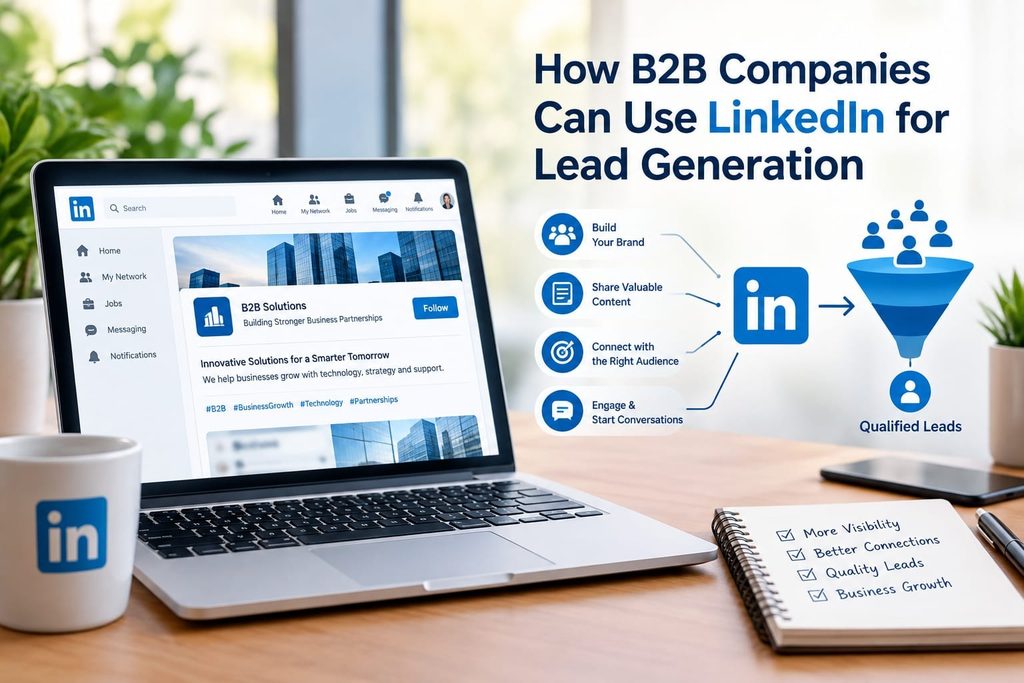
If you are wondering How to Use LinkedIn for B2B Lead Generation, start with a clearly defined target audience. Build a credible LinkedIn presence, publish content that addresses customer problems, identify relevant prospects, and use personalized LinkedIn Outreach to start conversations.
Once prospects begin engaging with your business, continue nurturing them rather than immediately pushing for a sale. Use analytics and Lead Generation Tools to measure results and improve your approach over time.
This process is more effective than sending large volumes of generic messages because it focuses on relevance and genuine business needs.
How to Generate B2B Leads on LinkedIn
To understand How to Generate B2B Leads on LinkedIn, businesses need to look beyond connection counts. The focus should be on identifying people who match the ideal customer profile and creating meaningful interactions with them.
Start by researching potential prospects and understanding their business needs. Follow their content, engage with relevant posts, and identify opportunities to provide useful information before introducing your product or service.
Personalized outreach can then be used to move the relationship toward a business conversation. Consistent follow-up is equally important because many B2B prospects require multiple interactions before they are ready to discuss a purchase.
How to Generate Qualified B2B Leads
How to Generate Qualified B2B Leads depends on the quality of your targeting and the relevance of your communication.
Rather than measuring success by the number of contacts collected, businesses should qualify prospects based on factors such as industry, company size, job role, business need, budget, and purchasing authority.
A qualified lead is more likely to have a genuine requirement for your product or service. Combining LinkedIn Prospecting, useful content, personalized outreach, and lead nurturing can help sales teams focus their time on stronger opportunities.
How Reach Skyline Can Support B2B Growth
LinkedIn works best when it is part of a wider digital marketing strategy. SEO, content marketing, paid advertising, website optimization, CRM, and lead nurturing can work together to support the customer journey.
Businesses looking for professional B2B Lead Generation Services can explore Reach Skyline’s digital marketing services to build a focused strategy for online visibility, engagement, and lead generation.
A strong organic presence is also important for attracting potential customers outside LinkedIn. Reach Skyline’s SEO and content marketing solutions can support businesses in attracting relevant audiences through search engines and valuable content.
The focus should not simply be on getting more followers or impressions. A successful strategy should generate qualified conversations, sales opportunities, and measurable business growth.
Final Thoughts
LinkedIn can be a powerful platform for B2B Lead Generation when businesses approach it strategically. The process starts with understanding the ideal customer and continues through content creation, personalized outreach, relationship building, lead nurturing, and performance tracking.
The key is consistency. Businesses that focus on solving customer problems and creating relevant conversations are more likely to build trust and generate qualified opportunities over time.
The most effective LinkedIn strategies do not feel like aggressive selling. They provide useful information, demonstrate expertise, and connect businesses with people who have a genuine reason to explore their solutions.
Frequently Asked Questions
1. Is LinkedIn effective for B2B lead generation?
Yes. LinkedIn is useful for B2B Lead Generation because it provides access to professionals, business owners, decision-makers, and industry-specific audiences.
2. How can businesses use LinkedIn for B2B lead generation?
Businesses can use LinkedIn by defining their ideal customer, publishing useful content, researching prospects, using personalized outreach, nurturing relationships, and tracking campaign performance.
3. What are the best B2B lead generation strategies?
The best B2B Lead Generation Strategies include audience targeting, content marketing, personalized LinkedIn Outreach, prospecting, paid advertising, lead nurturing, and performance measurement.
4. What tools can help with B2B lead generation?
B2B Lead Generation Tools can help businesses with prospect research, contact management, campaign tracking, CRM, automation, and lead nurturing. The right tools depend on the company’s sales process and requirements.
5. How long does LinkedIn lead generation take?
The timeframe varies based on the industry, target audience, offer, content quality, sales cycle, and consistency. LinkedIn Lead Generation is generally a long-term process focused on building relationships and generating qualified opportunities.